
PAVE in Geneva: Creating Pathways to Employment for Refugees
PAVE (Programme d’Aide Vers l’Emploi) is a Geneva-based programme implemented by the Hospice général that helps employers hire... En lire plus

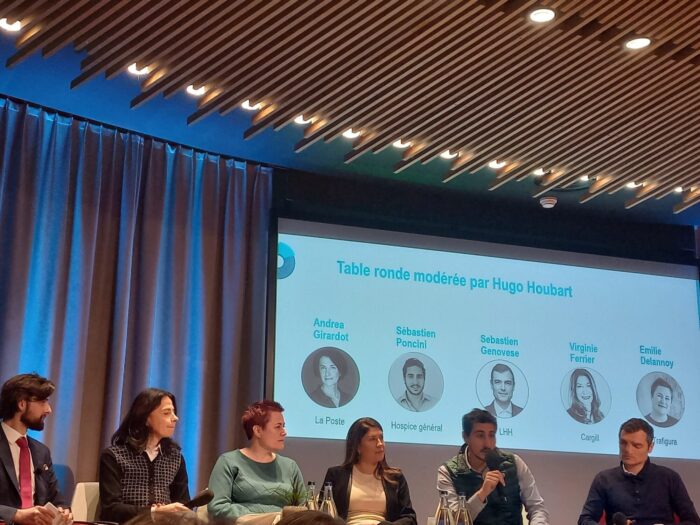
On January 13, I had the honor of attending the conference “Réfugiés et permis S : défis et opportunités pour les entreprises”, which brought together over 150 HR professionals, managers, and employers at FER Genève.
The morning session aimed to bridge the gap between companies facing labor shortages and skilled refugees holding Switzerland’s S protection permit (Permit S).
The event opened with remarks from Delphine Bachmann, State Councillor and Head of the Department of Economy, Employment and Energy (DEE), and François Rohrbach, President of the GEM (Groupement des Entreprises Multinationales).
Organized in partnership with the State of Geneva, Hospice général, GEM, FER Genève, and refugees@work, the conference offered a valuable platform to:
The event once again demonstrated Geneva’s ability to unite public institutions, businesses, and social actors around a shared objective: turning challenges into opportunities—and collective responsibility into concrete action.
In a country facing an aging population and growing labor shortages, sustainable labor-market integration is no longer optional—it is a necessity. As Delphine Bachmann emphasized in her presentation, public-private partnerships are essential to securing Switzerland’s economic future while strengthening social cohesion.
During the roundtable organized by GEM, FER Genève, the Canton of Geneva, and Hospice général, several strategic points stood out:
As François Rohrbach stated, “Geneva is a land of welcome. Integrating refugees is not only a humanitarian duty – it is a concrete response to labor shortages.”
Encouraging progress is visible. In less than one year, the employment rate of Permit S holders increased from 14.3% in January 2025 to 17.7% by the end of November.
However, challenges remain. As Delphine Bachmann reminded us, Switzerland has set ambitious national targets:
While some cantons have reached nearly 40%, Geneva is still struggling to exceed 20%, underlining the scale of the work ahead.
One of the highlights of the conference was hearing first-hand accounts from Permit S holders and employers. These testimonies humanized the statistics and highlighted the resilience of individuals who have rebuilt their lives in Switzerland.
Four Ukrainian women, in particular, shared striking success stories:
Elena Voytenko described her journey from displacement to securing a role in finance at Cargill. She explained how her pre-war management experience translated smoothly into her current position, supported by simplified hiring procedures.
“The S permit gave me stability, and Cargill’s inclusive approach turned my challenges into opportunities.”
Her story illustrated the added value refugees can bring to high-demand sectors such as finance and IT.
Inna Malaia, now working at Bevel One, recounted her transition into the Swiss labor market. With a background in trading, she navigated administrative hurdles with support from local experts and quickly progressed.
“From uncertainty to empowerment – that’s what the S permit and employer trust provided.”
Her experience highlighted the mutual benefit of integration: businesses gain motivated professionals, and refugees gain independence and stability. These stories were not about survival—they were about achievement, contribution, and resilience.
Olena Gavelia, Education Manager Export Europe at Groupe Clarins, delivered a powerful testimony on reintegration and the importance of employer trust.
She explained how displacement forced her to rethink her career path, but not her professional identity. Skills do not disappear when people are forced to leave their home country—experience, expertise, and motivation travel with them. The real barrier, she noted, is often not a lack of competence, but the challenge of having competencies recognized in a new system.
Olena shared how the S permit provided stability, but stressed that legal status alone is not enough. True integration happens when employers look beyond administrative labels and focus on transferable skills, adaptability, and motivation.
At Groupe Clarins, she found an environment that valued her background and encouraged continuous learning. Upskilling and professional development played a central role in her successful integration, allowing her to adapt to the Swiss context while building on prior experience. Her employer invested in her development—trust that restored her confidence and enabled professional growth.
She concluded with a message that resonated strongly with the audience:
“Integration is not just about employment. It is about dignity, confidence, and being able to contribute again. When someone believes in you, everything changes.”
Her story reflected one of the conference’s core messages: talent exists everywhere—opportunity makes the difference. Inclusive hiring practices do not only transform individual lives; they also strengthen companies and society as a whole.
The employer panel was particularly valuable for its concrete guidance:
Adrian Gerber, Federal Delegate (SEM), presented Basel City as a model canton achieving higher employment rates through:
What struck me most was that the conference didn’t only highlight challenges—it also showcased real opportunities for companies to access a pool of motivated, skilled professionals eager to contribute. Hearing directly from those who have navigated the system was genuinely inspiring.
The event also aligns with federal initiatives, including the SME portal, which now provides multilingual guidance and fast-track hiring procedures for Permit S holders—an encouraging step toward simplifying recruitment nationwide.
The session concluded with networking, reinforcing the importance of collaboration between employers and institutions. During this segment, I asked Emilie Delannoy (Trafigura) for advice on job-search success, and she emphasized that learning French is essential—especially when combined with real work experience, resilience, and staying active throughout the job-search process.
A heartfelt thank you to all speakers, participants, and partners who are turning the integration challenge into a tangible opportunity for Geneva’s economy.
Professionnelle multilingue avec une expérience internationale dans le soutien aux cadres supérieurs dans divers secteurs.