
IoT Is Not About You, It's About Us
LoRa is transforming the Internet of Things by solving a long-standing problem: how to connect thousands of sensors... En lire plus

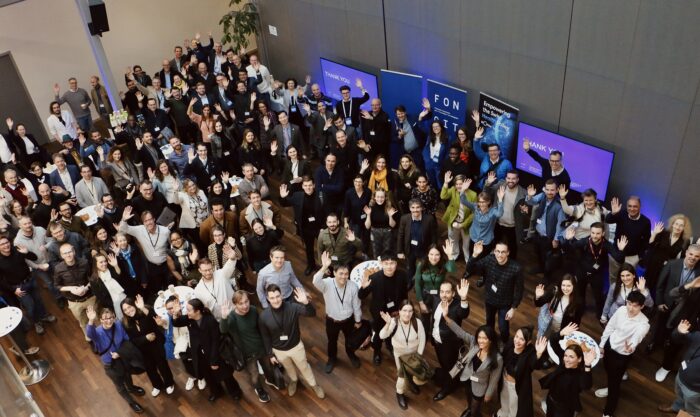
Stepping into Geneva’s most human tech start-up hub feels like entering the very heartbeat of innovation. It no longer belongs to the future — it has become part of eternity. When technology is guided by human creativity and the purpose of serving humanity, life itself begins to breathe beyond time.
I had the privilege of witnessing that energy firsthand by visiting the headquarters of the Fondation Genevoise pour l'Innovation Technologique, a private non-profit foundation supported by the State of Geneva, and speaking to Dr. James H. Miners, FONGIT’s Head of Startup and Innovation Programs. He welcomed me into the fascinating universe of start-up creation — a place where imagination meets impact.
Nestled between Geneva’s lakeside calm and its pulse of innovation stands an organization redefining what it means to build the future. More than an incubator or a co-working space, it is a living ecosystem where ideas meet empathy, and where technology grows from genuine human connection.
The organization’s mission is clear: to help founders turn bold ideas into sustainable companies—without losing sight of the people behind them. Its credo, “the foundation for innovation,” captures its essence perfectly. It’s not about chasing the next unicorn at any cost; it’s about building a community where startups can mature on solid ground—supported, challenged, and inspired.
In this space, every detail is designed to spark connection.
The offices are designed in the best tradition of the Swiss mindset—a blend of creativity, functionality, and natural elements.
But what might seem like casual networking is, in fact, a carefully engineered ecosystem of serendipity, where “introverted engineers arrive early, because they want the best sandwich, and start a connection over which one is the best, and end up discussing ideas that might turn into real projects”. Simple, effective, human.
The team calls it engineering human encounters. The concept is simple yet transformative: create spaces and events where talented engineers, brilliant scientists, ambitious founders, and curious investors can naturally meet. Sandwiches, croissants, or coffee breaks become bridges between people who might one day build companies together.
“We’re engineering the chance that the right people speak together,” explains Miners. “That’s how new teams form and new ideas take flight.”
“We get them ready to receive investment.”
The organization operates with the understanding that innovation cannot thrive without basic stability. Every startup that enters the program is treated as a real, living business—what they call a “rabbit” (Real Actual Businesses Building Interesting Technologies): a small but promising creature with the potential to grow into a unicorn (a private company valued at above CHF 1Bn).
“If investors and/or the market decide that the startup can fly to the moon, then the company can evolve into a unicorn. But if you treat every startup like it’s going to the moon, most of them will crash,” says Dr Miners with a smile.
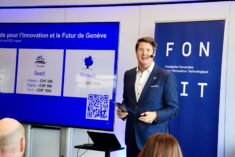
Dr. James H. Miners
Although not every tech startup needs to scale globally, they still deserve to be established and nurtured to create sustainable value and generate consistent income, be creative and continue developing their product, and so become a successful and profitable small company (SME).
“A lot of success is about avoiding failure,” says Dr Miners. “That’s why it’s crucial to get the foundation right.”
The mission of the hub is to create success that aligns with each startup’s own goals. There is no single measure of success—ultimately, it’s up to the entrepreneur and the team to decide what that looks like.
As Dr Miners states, “We concentrate on getting the fundamentals right, avoiding failure, focusing on the customer, and building from there. In the end, it is the team, the market and the investor that will decide which startup will be the biggest success.”
That pragmatic optimism has yielded remarkable results: over 70 percent of their startups survive beyond five years—far above global averages. Some evolve into small and medium enterprises, others become major players with hundreds of employees. But success here is not defined by valuation alone. It’s measured by resilience, learning, and the positive impact a startup brings to society.
One of the organization’s most striking commitments is its work to make entrepreneurship more inclusive.
“Startups can’t exist and can’t succeed without women,” Miners insists. “It’s too obvious to even debate.”
But it’s not just a moral argument—it’s also an economic and cultural one. If Switzerland doubled the number of female founders, the country’s startup landscape would double in size, because women are naturally creative.
Yet beyond numbers lies a human approach:
“Environments that are good for women tend to be good for everyone,” Dr Miners explains. “When you design spaces where women can thrive, you also make them better for engineers, scientists, and anyone who doesn’t fit the usual mold.”
FONGIT backs this vision with action. They recently hosted a live podcast by a new women-led group of entrepreneurs, Sisterpreneurs, where they share their entrepreneurial journeys and promote the role of women in business.
With support from Swiss partners like The Collective and FE+Male Think Tank, the organization also works to raise awareness about gender bias in funding.
Their message to investors is clear, states Dr Miners:
“Women-led companies are often more capital-efficient, achieving a 35% higher ROI on average. Investing in them isn’t charity—it’s a smart business choice.”
Language and imagery matter, too. To stretch cultural boundaries and expand the traditional business frame, the communication team uses inclusive language and consciously reworks how entrepreneurship is portrayed—replacing “male-coded” terms like dominate or conquer markets with words emphasizing problem solving, innovation, collaboration and creativity. They also avoid gender-biased images—where men traditionally take dominant positions and women appear secondary. Now it’s common to see women leading, deciding, and creating—not just listening, reflecting the future we all want.
Behind the scenes, the organization treats innovation like a scientific process with a human heart. Every coach undergoes training to recognize cognitive biases and to guide founders more inclusively.
“A scientific instrument needs calibration. So do we.”
This belief shapes everything—from how startups are selected to how success is defined. When founders apply, the first questions aren’t about money but about meaning:
Does this startup bring good? Is it ethical, sustainable, and relevant to society?
Only after that comes the business model.
“If we were just investors”, says Dr Miners, “we couldn’t fund half of these startups. But FONGIT is supported by the State of Geneva, which allows us to give a chance to those who might never turn into something big but can become good companies that make people’s lives better.”
You never know which one will become successful. There is no secret formula—just years of patient coaching, and support.
The organization uses the UN Sustainable Development Goals as a compass, ensuring that technology serves humanity rather than the other way around.
A startup creating VR tools for surgical training sits alongside another developing emotion-responsive gaming systems, one working on sustainable logistics, and another tackling femtech solutions. The diversity of fields mirrors the diversity of people behind them—and aligns with the needs of modern times.
Perhaps the organization’s greatest innovation isn’t technological at all—it’s cultural. Its success rests on the conviction that entrepreneurship is a collective act. Founders are encouraged to see themselves as part of a wider ecosystem, where cooperation beats competition, and social impact outweighs greed.
“Startups need supporters and friends. It takes a whole country to build a successful startup” summed up Miners.
This philosophy extends beyond mentorship or funding. The organization acts as a hub that connects universities, investors, public institutions, and private partners—creating a living network of support. If a project isn’t the right fit for them, they don’t turn it down; they redirect it to another program where it can grow. This open-door policy reflects a larger mission: to help every good idea find the soil it needs to thrive.
Switzerland is often described as cautious, even conservative. But the team behind this hub sees that as a strength, not a flaw.
“When I came back here twenty years ago, people said Switzerland should try to be more American—more like Silicon Valley,” recalls Dr Miners. “But we realized you can’t just change your culture. You’d lose what makes you great. We’re building a Swiss model of startup success—adapted to our culture, our values, and our people.”
This model balances precision with passion, humility with ambition. Swiss founders might pitch more quietly than their American counterparts, but when they speak, they’ve already built something real.
“They say less, but they’ve done more,” he laughs. “And that’s the beauty of it.”
At its heart, this Geneva hub is not just about creating companies—it’s about creating the conditions for people to play their best game. Its corridors hum with quiet confidence, fueled by the belief that innovation and inclusion are not opposites but allies.
From gender balance to neurodiversity, from AI to cures for cancer and logistics for artisanal cheese, every initiative here shares the same DNA: human-centered innovation. It’s the conviction that progress is not measured by how fast we move, but by how we move together.
Or, as Dr Miners summed up:
“We’re building a better future every day - through community, technology, and a lot of croissants.”
Mariia Kalinicheva | UX & CRO specialist with a passion for storytelling, UI and HTML