Many people think project management begins at work.
I see it differently.
Before the project, before the role, before the deadlines and the dashboards, there is the person — and the principles that shape how that person moves through life.
That is where real leadership begins.
Many people approach project management as a professional discipline.
They study planning, risks, deadlines, stakeholders, budgets, reporting, governance, and all the formal phases and processes that come with the profession. All of that matters. It has value. It is part of the work.
But over time, I have come to believe something simple:
The most important principles in project management do not belong only to work.
Respect is not a work tool.
Integrity is not a corporate skill.
Responsibility is not something that begins in a meeting room.
Care is not a technique.
Fairness is not a framework.
These things belong to life first.
Work is only one of the places where they become visible.
And maybe that is where many people get it wrong.
Some professionals learn the language of leadership, but not its essence. They know how to speak about values in a professional context, but they treat those values as if they only mattered inside the office.
To me, a principle that only exists at work is not really a principle.
It is a strategy.
Long before we manage projects, we manage ourselves.
Long before we lead teams, we choose how we treat people.
Long before we are trusted with budgets, deadlines, and responsibilities, life is already showing us what kind of person we are becoming.
That is why I no longer see project management principles as limited to the profession.
I see them as human principles first.
The workplace does not create them.
It reveals them.
A project, in many ways, is just a stage where character becomes easier to see.
Under pressure, we see whether someone stays calm or spreads confusion.
In conflict, we see whether someone protects the ego or protects the outcome.
In success, we see whether someone shares recognition or keeps it.
In difficulty, we see whether someone disappears or stays present.
That is why leadership can never be reduced to tools alone.
Tools help us organize work.
Principles define how we move through life.
I learned this in a very real way during a major telecom project.
At the time, the project had a main leader and two regional project managers. I was one of the regional project managers and also the newest person on the team.
My role was far from the spotlight.
I was not the one spending most of the time in executive rooms or in front of senior leadership. My work was much closer to the field, to the teams, and to the daily reality of execution.
I spent my time where the work was actually happening.
Supporting operations.
Solving practical problems.
Making sure the teams had what they needed.
Helping keep the work moving.
Trying to protect both delivery and morale.
That experience taught me something no manual could have taught me in the same way:
Leadership is often built far away from visibility.
In my region, I chose to lead with closeness.
Not because it looked good.
Not because it was fashionable.
But because it felt right.
I wanted the teams to feel supported, not just supervised.
I paid attention to what was slowing them down, what they needed, and what could help them perform with more confidence and stability. I also created simple forms of recognition around important milestones. Nothing complex. Just clear goals, shared commitment, and small rewards agreed in advance to celebrate meaningful progress.
It was simple.
And that is exactly why it worked.
Because life is often like that.
People respond to sincerity.
They respond to fairness.
They respond to presence.
They respond to leaders who care enough to notice what is happening beyond the spreadsheet.
The atmosphere changed.
The teams became more engaged.
Execution became more consistent.
And the results began to show.
Our region moved ahead of schedule.
At a certain point, I was invited to attend a general rollout meeting.
Honestly, I did not want to go.
From my perspective, the field needed more attention than another meeting room did. I felt my time was more useful close to the teams than sitting in a formal session.
But I went.
When I arrived, I realized it was not just another meeting.
The room was full. Senior leadership from the operator was there, including the CEO and key directors, along with many other stakeholders.
During that meeting, the work in my region was recognised as a benchmark for effective execution.
That moment stayed with me.
Not because of the praise itself.
But because of what it revealed.
It showed me that when leadership is grounded in real principles, the results eventually speak in a language that everyone can understand.
And it reminded me of something I still carry with me today:
The quiet work that sustains people and protects the outcome is never small.
That experience changed the way I understood project management.
Yes, project management is about delivery.
Yes, it is about structure, discipline, deadlines, and performance.
But before all of that, it is about how we choose to be.
Do we bring calm or pressure without purpose?
Do we create trust or only demand compliance?
Do we notice people or only tasks?
Do we care about the result alone, or also about the human path that leads to it?
These questions are bigger than work.
They belong to life.
And when a person truly lives those principles, the quality of the work becomes a consequence.
That, to me, is one of the deepest truths behind leadership:
Good work is often the visible result of invisible principles.
This is why I believe project management should never be treated as something purely technical.
The technical side matters. Of course it does.
But when technique comes without humanity, it becomes cold.
When structure comes without values, it becomes rigid.
When performance comes without care, it becomes empty.
The best professionals I have met were not defined only by what they knew.
They were defined by how they showed up.
They brought seriousness without arrogance.
Discipline without hardness.
Clarity without ego.
Responsibility without theatre.
And that is why their work carried weight.
Not only because it was well done.
But because it came from something real.
Today, I believe this more than ever:
Before project management, there is life.
Before the role, there is the person.
Before the method, there is character.
Before the deliverable, there is intention.
Before recognition, there is presence.
Before leadership becomes performance, it must first become principle.
Work does not invent who we are.
It reveals it.
And in the long run, the people who leave the strongest mark are rarely the ones who have only mastered the method.
They are the ones who understood that the method is useful — but the human being comes first.
By the same author:
🧾 PMP ou PRINCE2 : Quelle certification est faite pour vous ? La vérité que personne ne vous dit.
🧾 IoT Is Not About You, It's About Us
🧾 L'aventure secrète de votre internet : Un voyage de Google à vous
🧾 From the Dojo to Management: The Karate Compass for Leadership in Times of Crisis
References
Project Management Institute (PMI). 12 Principles of Project Management. Official PMI reference:
Project Management Institute (PMI). Code of Ethics and Professional Conduct. Official PMI reference:
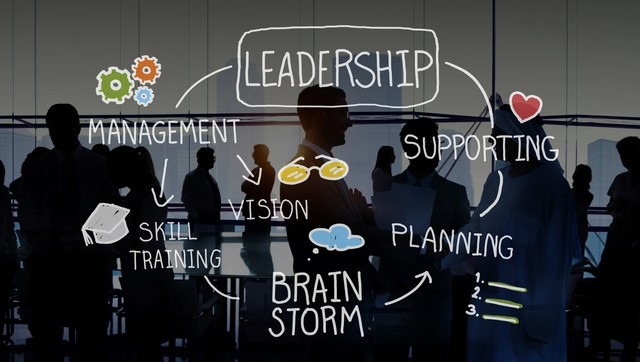
Image: AI-generated using chatGPT