It’s Not Just About CRM. It’s About How People Connect
CRMs provide valuable data, but they cannot fully capture the conversations and shared experiences that influence buying decisions.... En lire plus

Search Engine Optimization (SEO) was part of my work at the very beginning of my career - long before I even knew it had a name.
I was improving website content, working on copywriting, structuring pages, adding meta tags, and optimizing technical elements, which we now clearly define as SEO.
Today, the digital landscape is evolving faster than ever. The rise of AI is not just influencing SEO; it’s reshaping how search works, how content is discovered, and even who (or what) makes decisions.
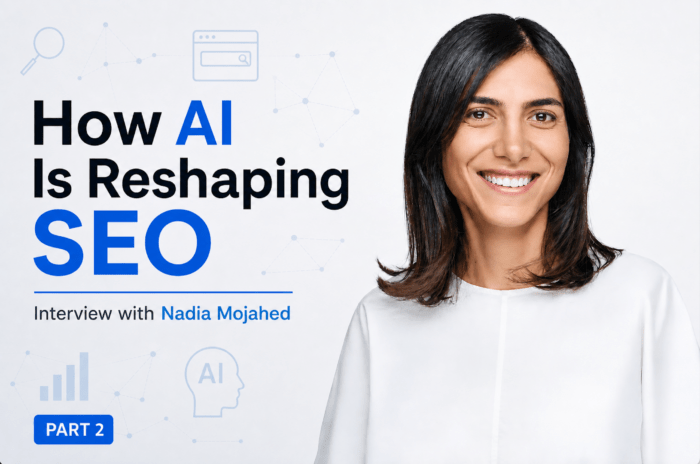
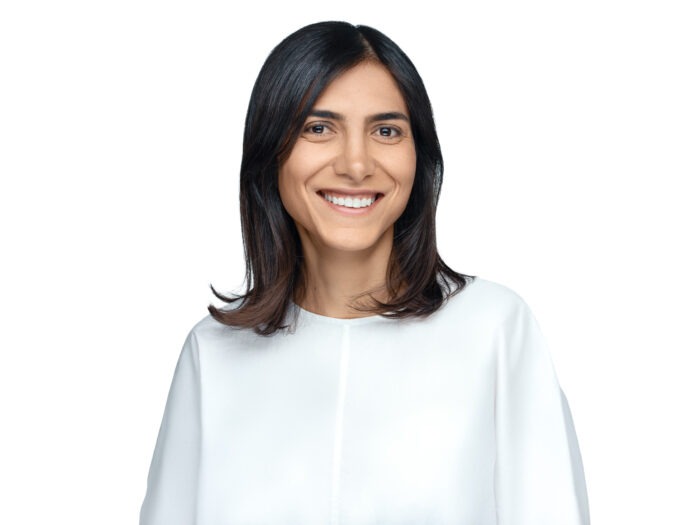
To better understand what these changes mean in practice, I spoke with Nadia Mojahed, Founder & Senior SEO/AI Strategy Consultant at SEO Transformer, Lecturer in Digital Marketing at the Swiss School of Business and Management.
In this two-part interview, Nadia and I explore how AI is transforming search, what businesses should focus on today, and how to stay competitive in this rapidly shifting environment.
Nina: I keep hearing that AI is changing everything. But what does it actually change in how people behave online? Especially when it comes to decisions and conversions?
Nadia: Platforms like websites themselves are increasingly expected to drive conversions. But that conversion layer will also be handled by agentic AI.
So today, brands need to optimize for both: human users and AI agents.
Because more and more decisions and transactions will be made by AI tools on behalf of users.
Nina: Sometimes it feels like we’re moving away from SEO completely. Is that true or are SEO and AI just starting to work together?
Nadia: Traditional SEO remains the foundation.
You cannot have visibility in AI without a solid SEO base, because these systems rely on what already exists in traditional search structures.
But modern SEO goes beyond that foundation. It adds multiple layers, so you can not only rank in search engines but also be visible and cited by AI tools.
Nina: There are so many “new rules” now… but what really changed? Like, what should businesses stop doing, and what should they focus on instead?
Nadia: Tools are evolving, just like AI and search engines.
In the past, it was important to follow tools like Yoast and aim for those “green lights.”
They can still help beginners, for readability, and for structuring content. But they are not enough anymore. You can follow all those rules and still not rank.
Today, it is about:
Content needs to be clear, accessible, and truly useful.
Many tools give scores, but you need to be careful. They don’t always reflect what actually drives results. And yes, AI tools like ChatGPT can generate content, but that’s just a base.
Nina: How do you balance content for humans and for AI?
Nadia: First of all, if you invest effort into content and website optimization, you also need to invest time in understanding what actually drives results.
There are many changes and developments, and to succeed, you need to know the rules of the game. If you don’t, you won’t get results, even if you put in the effort.
Many people invest time, but not in the right way.
The key is to understand what your website needs and address it. This requires both a solid foundation and awareness of ongoing developments.
You can either build this knowledge yourself or work with a consultant who sets the strategy and guides the process. It depends on your level of expertise.
SEO includes multiple elements:
All of these are interconnected. Content is the base, but it must be accessible.
For smaller websites, content plays a bigger role, but technical fundamentals still need to be in place. If a page is blocked or not accessible, even the best content won’t be visible
As websites grow, technical aspects become more critical due to the number of pages to crawl and index, which is limited by search engine resources.
Optimization is always a phased process. You start with fundamentals, then gradually improve. As visibility and results grow, the business can reinvest and continue developing further.
Nina: I’ve also been thinking about this: AI seems to prefer short, clear answers. But what about long, expert content, like research or deep articles? Does it still work?
Nadia: It depends on the structure. Very long content can absolutely work, but not in the same way as before.
For example, research content is usually published on dedicated, high-authority platforms or academic repositories (e.g., Google Scholar, ResearchGate), where it is indexed through complex bibliographic metadata and citation networks, which differ from standard website SEO.
But when it comes to websites, it also depends on how you organize the content.
Because, as you said, it doesn’t make sense to have 30,000 characters on one page.
In this case, you need:
You need to organize your content so it is accessible and easy to navigate. That’s where website architecture becomes critical.
As long as the content is unique and adds value, it should be indexed.
But duplication needs to be managed carefully, so you don’t waste crawl budget.
So, it’s not about the length itself. It’s about structure, accessibility, and how well the content is organized.
Nina: There are so many AI tools now. Do you use AI tools in your workflow? What’s useful today, and what isn’t?
Nadia: For us, it is not really about using tools as they are. We’ve actually built our own internal tools based on our processes, frameworks, and guidelines. Because we needed something that really fits how we work.
We use different APIs depending on the specific step of the process, and we integrate them to create more data intelligence behind our content decisions.
So, it’s not just automation. It’s about supporting content optimization with deeper insights.
But honestly, it was a long journey. We didn’t just build something and start using it immediately. We had to test it, validate it, and adjust it. Because in SEO, you don’t see results tomorrow.
You need to be sure that what you implement actually works over time. Only after that can you really rely on it.
So yes, AI tools are powerful, but their value depends on how well they are adapted to your process and how well you understand what you’re doing with them.
Nina: What about tools like Claude? People are talking about automations everywhere. Can we really rely on them already?
Nadia: It depends on how you implement them.
For me, I know how to set the SEO process using Claude, APIs, and these kinds of tools, because I understand the process itself. I can test it, write the instructions, and oversee the whole process to make sure the outcomes are correct.
If you ask me to do the same for something like graphic design, I wouldn’t be able to do it, because I don’t know that process.
Yes, these tools can drive results. But only when the people implementing them understand what outcomes they need, what should be fed into the system, and what options they have.
So, it’s not only about the output. It’s also about understanding the options, knowing how to test, and choosing the right tools. Because, depending on the task, I wouldn’t always choose something like ChatGPT or Claude API. Sometimes I would choose something else. It really depends.
It’s similar to choosing tools for design: sometimes it’s Canva, sometimes it’s another tool.
So, it depends on the quality and on how you combine tools and capabilities to actually drive the results you’re looking for.
Nina: I also see that everything is getting mixed now: SEO, AI, ads… Before it was clear: SEO gives long-term results, and ads are quick. What about now? Has it changed with AI?
Nadia: It's very important. Ads are essential. In the past, if your clients were already discovering you through organic, it made sense to complement it with ads. Nowadays, they are becoming even more important, especially with how search engine results pages and visibility are evolving. It depends on the industry and the target audience. Some industries rely heavily on ads and simply cannot survive without them.
Ads are increasingly integrated with AI. Google is launching more AI-powered tools and functionalities, and Bing is as well. I haven’t tested that myself. I have someone who helps me with ads. Now it’s also about chatbots and, for some markets, solutions like ChatGPT Ads. There are also ads appearing in AI overviews and AI-generated answers. SEO and SEA are both important, and it is recommended to use them together.
We would like to thank Nadia for sharing her insights and taking the time to speak with GBN. Your expertise is truly appreciated!
In the second article of this series, to be published soon, Nadia explains what businesses should focus on today and how to stay competitive in this rapidly shifting environment.
By the same author:
🧾 Pourquoi les campagnes Google Ads échouent en Suisse et comment les faire fonctionner
🧾 Why Google Ads Campaigns Fail in Switzerland - And What to Do About It
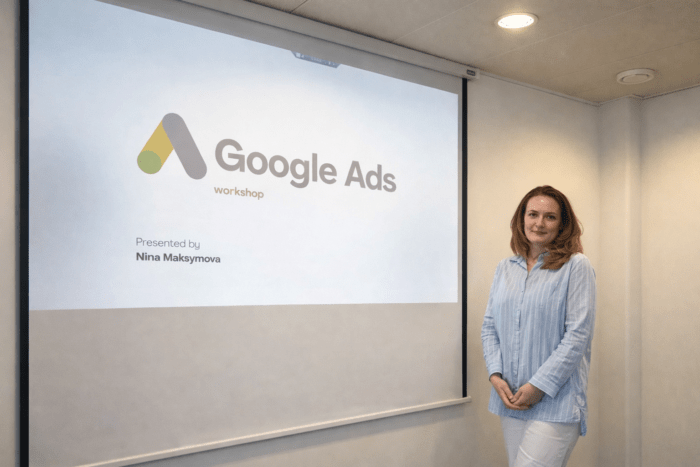
🧾 Réflexions sur l'atelier Google Ads : stratégie, structure, localisation
🧾 Google Ads Workshop Reflections: Strategy, Structure, Localization

I analyse projects, including contextual advertising audits. I identify weaknesses and highlight opportunities you may not even be aware off.