From the Dojo to Management: The Karate Compass for Leadership in Times of Crisis
Discover how the principles of Shotokan Karate guided a business leader through a major supply chain crisis, turning... En lire plus

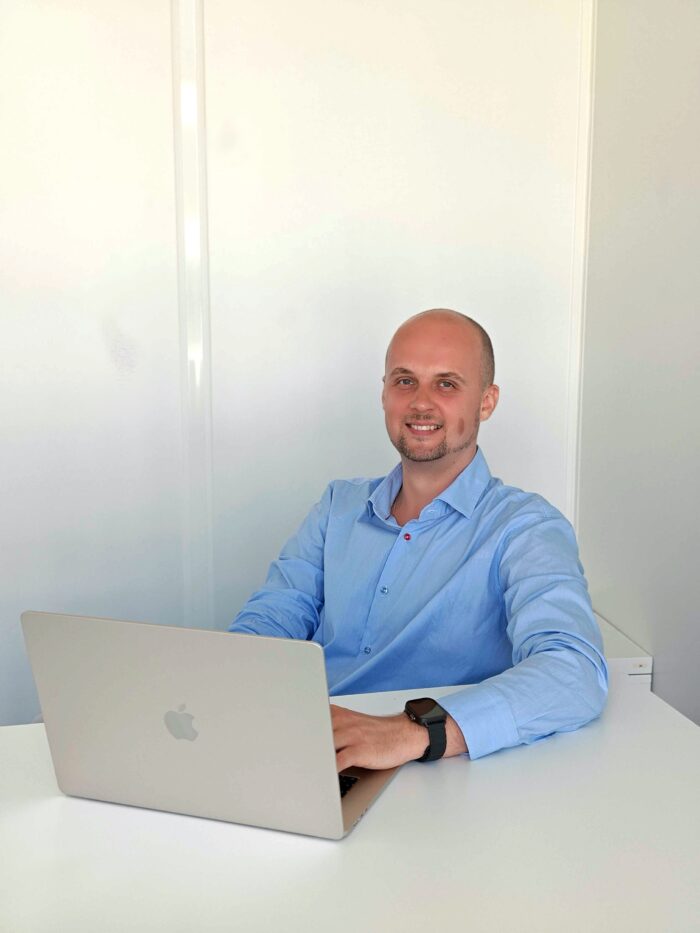
Artem Chebanenko is a Project manager and editorial contributor at GBN. We sat down with him to delve into his approach to work and the value he can bring to a company.
When a project begins to drift, Artem Chebanenko does not try to make the dashboard look reassuring. He wants to know what is actually happening.
A deadline is slipping. A supplier has changed position. The requirements no longer match operational reality. Everyone is busy, but no one owns the next decision. These are the situations in which Artem is most useful.
A project and operations professional, he specialises in turning incomplete or conflicting information into a workable course of action. His strength is not simply recognising that something is wrong. It is separating facts from assumptions, clarifying what is at risk and helping the people involved decide what must happen next.
“Most companies do not lose money because nobody had a framework,” he says. “They lose it because a weak assumption survived too long, a risk stayed hidden or a green status existed only on a slide.”
Artem looks beyond the formal plan to test whether it can survive contact with reality. He examines figures, correspondence, supplier commitments, user needs and competing accounts of a situation. He then turns them into clear actions, with an owner, a deadline and an understood consequence.
Earlier in his career, Artem worked on a public-sector equipment-upgrade project whose requirements did not fully reflect either the market or the daily needs of the people who would use the equipment.
The process could have continued as planned, but the likely result would have been delay and an expensive solution that failed to address the real operational need. Rather than remain silent, Artem gathered user requirements, developed alternatives and raised the issue through the appropriate procurement and management channels.
He did not present it as a personal disagreement. He focused on timing, usability and the cost of buying the wrong solution. Management implemented part of Artem’s recommendations, and those changes worked as intended. Other elements continued along the original route and later caused delays and operational problems. Once the alternative approach was adopted there as well, the project moved forward successfully. The experience reinforced a principle that has stayed with him: when a problem is visible early, silence allows the cost to grow.
He describes himself as direct and analytical, but he has learned that a strong opinion is useful only when supported by evidence and accompanied by a credible alternative.
“I do not need conflict,” he says. “I need something that works.”
Artem is particularly effective where specialist knowledge, budget constraints, deadlines and operational reality must become one decision.
He does not claim to replace technical experts. His role is to understand each perspective well enough to identify gaps, contradictions and risks, then build a shared picture that allows specialists and decision-makers to move forward.
This ability is increasingly valuable in an environment shaped by AI. Artem uses AI tools to compare information, test alternatives and accelerate analysis, but he is clear about their limits.
AI can make analysis and communication faster, but it cannot carry responsibility. A person must still decide which information is reliable, where the risk sits and who will be accountable if a recommendation is wrong. For Artem, technology is a co-pilot rather than an oracle.
Since arriving in Switzerland from Ukraine because of the conflict, Artem has had to rebuild his professional position in a new language and labour market. He has improved his language skills, completed an Executive MBA, and continued to create evidence of what he can do.
At Geneva Business News, apart from Project management, he was asked to take a role in the editorial department; a new field for him. His first article required him to find a useful angle, research it thoroughly and produce something readers could apply. His second involved analysing a complex AI-governance topic and delivering a defensible argument within four working days.
The experience confirmed that his underlying skills transfer across sectors. He can enter an unfamiliar subject, identify the essential questions, work through complexity and produce a useful result for a professional audience.
For Artem, returning to work is also about independence, dignity and responsibility towards his family. He wants rebuilding to be visible in the work he produces and the responsibilities he takes on.
He understands the hesitation that can accompany an international profile or Permit S. He does not ask employers to ignore legitimate questions about stability, administration or integration. He asks to be assessed through the work.
A practical case, clear objectives or a structured probation period would allow both sides to make an informed decision. For Artem, that is not special treatment. It is sound due diligence.
Artem is now looking for a project, operations or coordination role in which he can take responsibility for a genuine outcome. The sector matters less than the nature of the challenge.
He is drawn to work involving ambiguity, competing priorities, incomplete information and decisions postponed for too long. He can adapt to different tools, sectors and working styles, but he will not hide difficult facts behind comfortable language.
His professional proposition is straightforward: give him a real problem, enough data and access to understand it, and clear responsibility for helping solve it.
Image: Oksana Omelchenko