Un diamant d’exception aux enchères chez Sotherby’s
Le 15 mai prochain à Genève, Sotherby’s va mettre en vente le Farnese Blue, un diamant historique de... En lire plus

We all know big auction houses like Sotheby's and Christie's by name, but do you know when and how the practice of auctioning started, or even what was sold at first?
The humble beginnings
According to The National Auctioneers Association, the first auctions where held in 500 B.C. According to ancient Greek scribes’ documents, these auctions were not about selling valuable paintings or rare diamonds. They were about selling women who were auctioned off as wives. Needless to say, auctions at that time were a far cry from all the glamour they can reflect today.
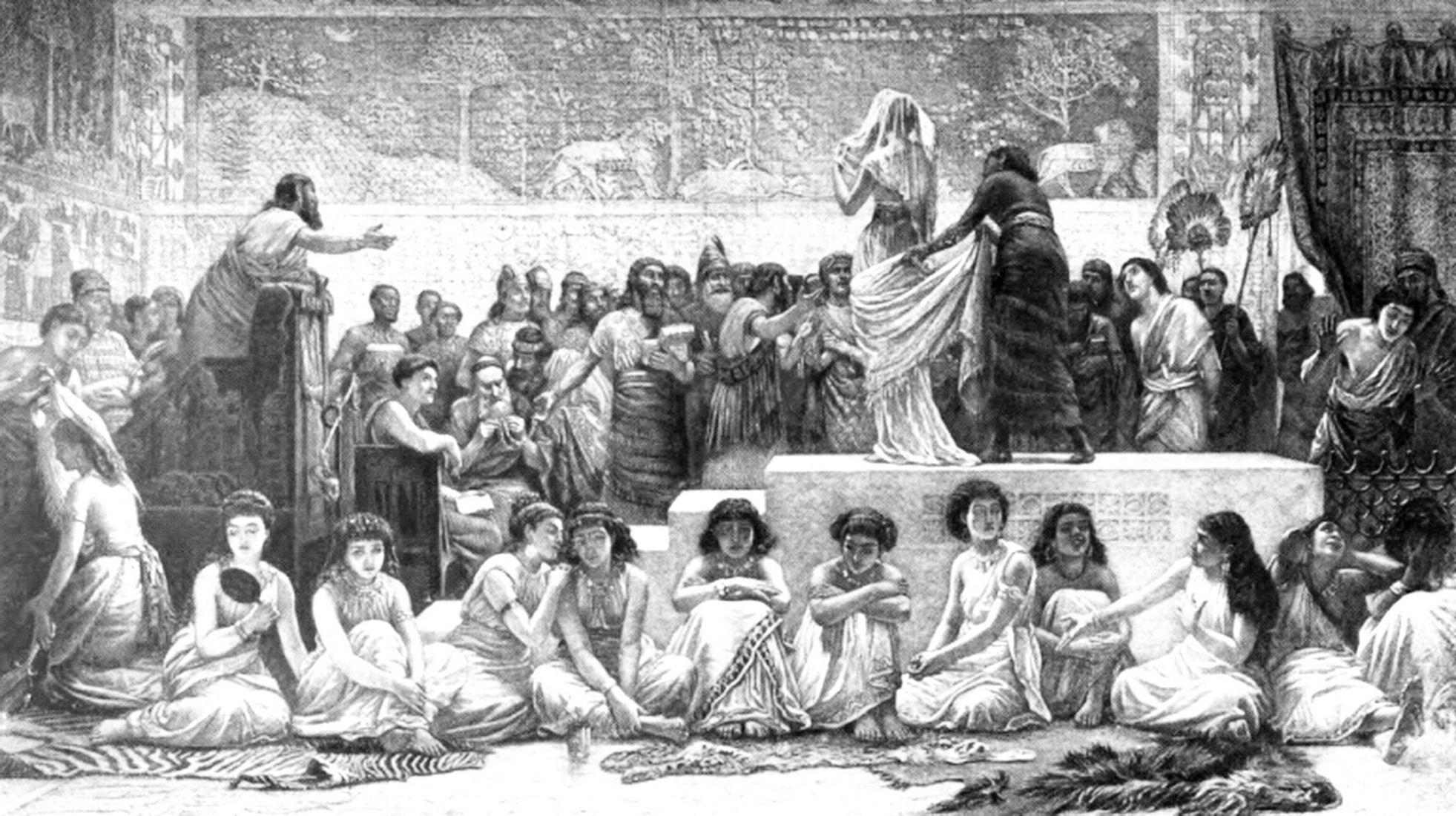
Back then, auctions were organized differently. They would use the “descending” method, starting at the highest estimation as the asking price. Then, they would keep lowering the price until there was a bid. The first to bid was the purchaser.
Around the age of Christ, people in Rome started selling family estates and war trophies. Even the Roman Emperor used auctions to satisfy debts. At that point, auctioning changed to look a bit more like what we see today.
However, it took a long time before the practice of auctioning reached America. When the Pilgrims arrived in 1600 on the eastern coast of the continent, they began the practice of auctioning goods they discovered in the New World, which were then shipped to the Old World. For example, auctioning was used to sell fur pelts, which were then shipped across the Atlantic. The fur trade was so big, it undeniably helped North America settle and develop.
Timeline of an auction house
Sotheby’s is known all over the world as a leader in auctioning, and is the oldest recognized auction house in the UK (there are only three older auction houses in Sweden). It had its humble beginnings in 1744, when a bookseller named Samuel Baker held his first auction –the sale of rare books of the library of Sir John Stanley. During the 1800’s, Sotheby’s began auctioning medals, coins and prints. It was not until the early 1900’s that Sotheby’s took on the art world.
Unfortunately, the great depression of 1929 slowed the whole economy down, and people had less purchase power. It was not until after World War II that the economy grew strong again. In the 1950s, the sale of goods and real estate were soaring, and people were desperate to sell in a fast-paced market. At that moment, auctions became what we now know.
Sotheby’s opened its New York office in 1955 in the financial district near Wall Street. The years after were very exciting, having set a few prominent records. Over the years, the house was able to forge the reputation as a world leader, and was entrusted with some of the most valuable treasures the art world has ever seen. Amongst them were Picasso’s Garçon à la Pipe, Giacometti’s L’Homme Qui Marche I, the Duchess of Windsor’s Jewels and most recently, the Blue Moon Diamond. What all these pieces have in common is that they set world records in their era.
Auctions and technology
Technology burst into the auction world in the 1990s. It increased the cadence of sales and opened them to people all over the world. Suddenly, there was no need to physically be there at the auction. Bids could be made on the phone, using computers, fax machines and more. Also, photographs were taken of the items and projected on big screens so the audience could get a closer view and follow the sales.
In 2000, Sotheby’s created sothebys.com, an online platform to hold online auctions. They were the first international house to do so. Anyone can now register online to participate and bid during sales.
Nowadays, auctions can also be seen as investments. The specialty of big house auctions like Sotheby’s is to sell valuable pieces such as master paintings, antiques, watches and rare jewelry pieces. They are selling stories, a heritage and technical traditional prowess, but overall they are selling history. It’s no longer just about buying common goods. It’s about preserving history for the generations to come.
Sources:
https://mikebrandlyauctioneer.wordpress.com/auction-publications/history-of-auctions/
http://www.sothebys.com/en/inside/about-us.html
https://en.wikipedia.org/wiki/Sotheby%27s
Image: The Babylonian Marriage Market, Edwin Long, 1875