In the business world, we learn to navigate spreadsheets, optimize processes, and manage projects.
But how do you react when the map becomes useless and the crisis is not a number, but a challenge to the very existence of your company?
That is exactly what I experienced when I realized that my key supplier in China had become a hidden competitor in Brazil, using our agreement to redefine the rules of the game without warning.
The immediate reaction of many would be turbulence. However, an internal compass, calibrated over 30 years in another arena, pointed the way: Shotokan Karate. More than a martial art, karate is a training for life, and the principles of its founder, Gichin Funakoshi, became my strategic manual to transform this challenge into an opportunity for growth.
The Lesson of Vigilance: Turning Negligence into Wisdom
The first step was to take responsibility. Funakoshi's 7th precept is clear:
"Misfortunes arise from negligence."
The dependence on a single supplier was not a betrayal; it was a valuable lesson about the importance of diversification. Rather than blaming the "opponent," karate taught me to analyze my own stance. Complacency had created a vulnerability; now, it was time to transform it into strength. The situation demanded not retaliation, but a complete and swift reassessment of my strategy.
The Calm of the Dojo: Mental Clarity Under Pressure
The task was monumental: managing operations in Brazil remotely, finding new suppliers, ensuring superior quality, reducing costs by at least 30%, and above all, staying calm. Imagine the clarity required to make high-impact decisions while the ground seems to shake beneath you.
Funakoshi's 4th precept became my mantra:
"First control yourself before attempting to control others."
The discipline of the dojo, where the mind must remain serene even under intense physical pressure, became my greatest management tool. I needed to feel the pulse of the situation without letting my own pulse race.
The Adaptive Movement: The Strategy Behind the Action
I decided to spend three months in China. The search was intense, arduous, and fruitful: I found two new suppliers with superior quality and costs 40% lower. However, a new obstacle emerged: both had exclusivity contracts with other competitors of mine in Brazil. The door seemed shut.
This is where the philosophy of karate becomes more subtle. The 14th precept states: "The battle unfolds according to how you move, guarded and unguarded." And the 18th reminds us: "Practicing a kata is one thing; engaging in a real fight is another."
The theory was to find a supplier; the reality was a complex commercial barrier. Instead of a frontal attack, I needed an adaptive movement. The solution was to open a trading office in Hong Kong, a neutral entity that could purchase the products and export them to my factory in Brazil. It was a strategic move, not brute force, which bypassed the obstacle without direct confrontation, protecting not only the Brazilian market but opening doors across all Latin America.
The Result: The Resilience of "Not Losing"
The result was transformative. With costs 40% lower and superior quality, I not only recovered my market but expanded my share. More importantly, the company became more resilient. This brings me back to Funakoshi's 12th precept:
"Do not think of winning. Think, rather, of not losing."
My goal was not merely to "win" the crisis, but to ensure that my company would not "lose" in that way again. The creation of the trading company and the diversification of suppliers were defensive moves that strengthened my entire operation for the future.
| Phase of the Challenge |
Funakoshi's Principle Applied |
Leadership Skill Demonstrated |
| The Challenge |
"Misfortunes arise from negligence" (Responsibility) |
Risk Analysis and Strategic Vision |
| The Task |
"First control yourself" (Self-Control) |
Crisis Management and Emotional Intelligence |
| The Action |
"The battle unfolds as you move" (Adaptability) |
Creative Thinking and Complex Problem-Solving |
| The Result |
"Do not think of winning, think of not losing" (Resilience) |
Risk Management and Long-Term Planning |
Karate, like business, is like boiling water, says the 11th precept. If you do not heat it constantly, it will cool. This experience was an intense heating, a reminder that the principles of discipline, resilience, adaptability, and strategy are not only for the dojo. They are the foundation upon which careers and companies are built and, when necessary, transformed.
What about you — what philosophy or life experience shapes your professional approach in times of crisis? I would love to read your stories in the comments.
Oss!
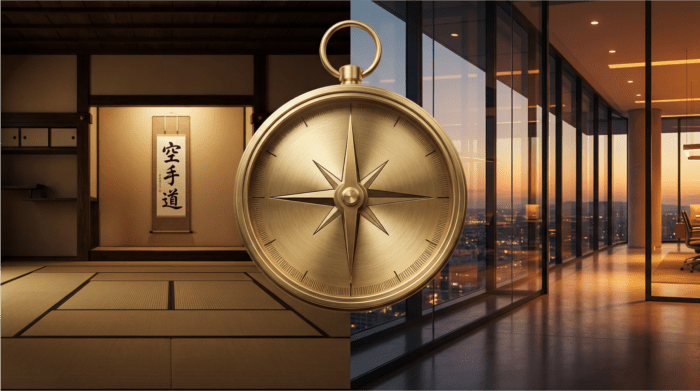
Image: AI-generated using Manus AI (https://manus.im). Original creation, February 2026.