
Google Ads Workshop Reflections: Strategy, Structure, Localization
Last week, the author delivered a beginner Google Ads workshop and deliberately raised the bar by rebuilding the... En lire plus

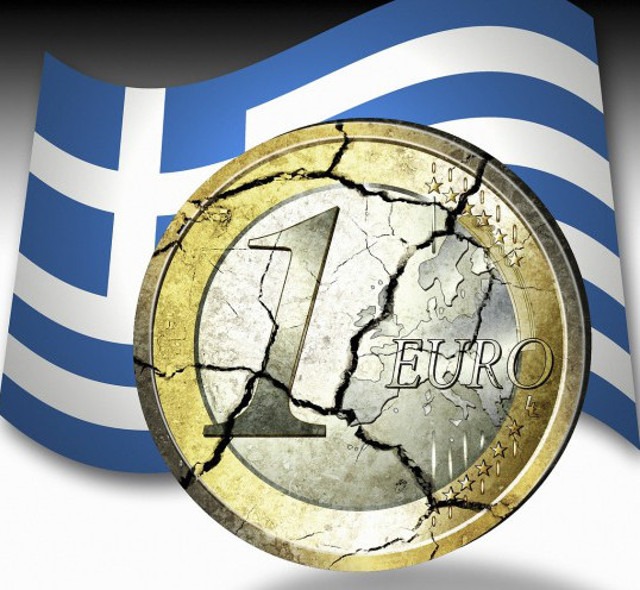 As Greece continues its battle with the IMF and its creditors over its gargantuan pile of debt and a still faltering economy, a seed of an idea is circulating the markets and it may be germinating…
The idea is a simple one: could five of the largest corporates in the world, and their 440bn US dollar cash pile, bail out Greece?
Well, they certainly have enough money to do so. Currently, Greece requires around 220bn USD to bring its national debt down to a more manageable 70% of GDP. However, Greece is already struggling to meet interest payments on its IMF loans, let alone come up with that kind of capital.
The idea essentially involves a corporate bailout of Greece. US companies with the largest cash piles are Apple, Microsoft, Google, Pfizer and Cisco. Just these companies alone have a cash hoard in excess of 440bn USD, most of which is actually sitting outside the US borders. If they were to bring this cash onshore to the US, they would have to pay a 35% repatriation tax charge.
The notion is that, with some originality from both sides of the pond and a little inventiveness when it comes to law making, these five corporates and the Eurozone could manufacture a mutually beneficial way of moving forward.
The use of 220bn of their cash would amount to just 12% above the repatriation tax to bring the cash back to US shores. The repatriation would need to be done, even if the companies just wanted to return the cash the shareholders. Yet if these companies were to strike such a deal with Greece, in return for the cash injection, Greece could reward the corporates with a concrete tax deal on all future non-US earnings. Such a deal would be very beneficial to these companies indeed.
However, 35% of nothing is still nothing. This notion would clearly attract great opposition from the likes of the US Tax authorities, primarily because of the amount of tax they stand to lose. The IRS is not currently receiving any tax on this cash due to loopholes in cross border taxation, like the strategy Apple currently employs through Ireland. Also, considering that the US is the largest shareholder of the IMF, they could lose a substantial amount if Greece were to default properly. Would we even want to imagine the consequences in the world markets if Greece defaulted and left the Euro?
There is no precedent for this type of corporate bailout manoeuvre. However, when looked at pragmatically, this solution does “tick a lot of boxes” to make it a viable solution —for Greece and its creditors, not to mention the added stability it could bring to the Eurozone markets. Could this now be the time for corporates to start plugging the money gaps where governments cannot? After all, in a bad economy, no consumers means no corporate sales, no corporate sales means less tax to governments and no growth, meaning no one wins and the cycle will continue.
Source: http://www.bloombergview.com/articles/2015-05-11/apple-could-make-money-by-bailing-out-greece
Photo credit: hslergr1 via Pixabay, CC0 Public Domain License


It is amazing that the world largest companies are sitting on so much cash. That is certainly a good indicator of their past success, but it probably also indicates that is not so easy to find new growth and investment opportunities that are complimentary to their current businesses and at the same time generate the expected returns.
Could Greece be an investment opportunity?
I think it certainly would be, if Greece could succeed in creating an attractive investment environment.
To do that, in my mind, the biggest challenge for Greece is to ensure that the present budget problems and the bureaucracy don't further increase the on-going uncertainty for investors.
The key success factors certainly include to reform laws and the tax system so that citizens and investors perceive them as fair and competitive.
That is a Herculean task but inevitable in the long-run.
Having achieved that, Greece would put itself back in the driver's seat of its own destiny.