Les professionnels de GBNews.ch s'allient à la puissance des technologies en intelligence artificielle générative, pour informer la communauté des affaires et le grand public, des dernières tendances et des évolutions du marché de l'emploi.


Switzerland remains one of the most attractive jurisdictions in the world for foreign entrepreneurs: competitive taxation (effective corporate tax rates typically between 12% and 18%, depending on the canton and commune), political and legal stability, high-level infrastructure, access to European and global markets, and highly specialized sector ecosystems (for example, finance in Zurich/Zug, commodities trading in Geneva-Zug).
However, for nationals of third countries (outside the EU/EFTA and outside the specific post-Brexit regime for the United Kingdom), the process of starting a business remains strictly linked to residence and work permits.
Without a valid permit to carry out an independent activity, the entrepreneur cannot legally work in their own company¹.
Under Swiss law, an Sàrl or SA can be validly incorporated and registered in the commercial register by a non-resident; what is prohibited is carrying out a lucrative activity in Switzerland without the appropriate authorisation (Art. 11 et seq. LEI). The company can exist, but a foreigner cannot legally work in it without a permit.
This guide focuses on the most complex case: an entrepreneur from a third country wishing to create a company in Geneva in 2025–2026.
EU/EFTA Citizens
Citizens of the European Union and EFTA countries benefit from the Agreement on the Free Movement of Persons (AFMP). They can establish themselves in Switzerland as self-employed under the following conditions:
— Mandatory registration with the commune within 14 days of arrival.
— Proof of a real and viable independent activity: business plan, contracts or mandates in Switzerland, and income forecasts sufficient to cover living costs (often around CHF 3,000–5,000 net per month, depending on the canton and family situation).
— Address of residence in Switzerland and health insurance compliant with LAMal.
In practice, the granting of a B permit (5 years) is common when the independent activity is real, sustainable, and economically viable. However, it is not automatic: the cantonal authority examines the project's credibility and compliance with legal conditions.
United Kingdom Nationals: British nationals are no longer treated as EU/EFTA citizens following Brexit. They fall under a separate third-country regime, even if certain specific arrangements remain in place. They no longer benefit from the free movement provisions under the AFMP.
Nationals of Third Countries (non-EU/EFTA, outside the UK): Nationals of third countries are subject to federal quotas (Art. 20 LEI). In recent years, the Federal Council has set annual quotas in the range of 8,500 authorisations per year (for example, 4,500 B permits and 4,000 L permits), excluding specific quotas for the United Kingdom.
For self-employed entrepreneurs, there is no separate quota: applications fall within these general quotas.
To obtain a residence permit for independent activity, the project must demonstrate a clear economic interest for the canton (Art. 18 et seq. LEI, Art. 19, 23, 27 OASA), particularly in terms of:
— creation or maintenance of jobs for the local workforce (Swiss nationals and EU/EFTA residents);
— significant and sustainable investment;
— innovation, transfer of know-how, or diversification of the cantonal economy;
— taxes and social charges generated in Switzerland;
— no reliance on social assistance.
For a third-country entrepreneur, the business plan is the central document in the application. It must meet the criteria arising from the Federal Law on Foreign Nationals and Integration (LEI) and the Ordinance on Admission, Residence and Gainful Activity (OASA), in particular:
— economic interest for Switzerland: creation or maintenance of jobs for the local workforce, innovation, diversification of the economy, and new contracts for Swiss companies;
— high professional qualifications or expertise of the founders: training, experience, and sector expertise;
— sufficient financial resources to cover personal and family needs without recourse to social assistance;
— real, sustainable, and independent activity (and not disguised salaried employment).
A credible business plan generally runs from 10 to 40 pages and includes:
— a detailed description of the planned activity in Switzerland;
— an analysis of the Swiss market and local competition;
— commercial strategy and local marketing;
— financial forecasts over 3 to 5 years: turnover, costs, cash flow, and break-even point;
— a personnel plan (job creation in Switzerland);
— risk analysis and SWOT;
— proof of funds (bank statements, capital attestations).
Based on feedback from practitioners and accepted applications, the following indicative thresholds are often observed:
— personal income required to live in Switzerland: CHF 50,000–80,000 per year (higher in Geneva or Zurich);
— target turnover: at least CHF 100,000–500,000 per year in the medium term;
— own capital / initial investment: CHF 50,000–200,000 or more, supported by bank proof;
— job creation: ideally 1–2 local employees (Swiss/EU/EFTA) within the first 3–5 years, or more to strengthen the file.
These thresholds do not appear in the law but reflect the usual expectations of immigration and economic development authorities.
The most common legal forms for foreign entrepreneurs are:
— Sole proprietorship (raison individuelle): simple to create, but with unlimited liability and sometimes a less professional image; for a third-country national, this status does not confer any right to a B permit for independent activity and is often less suitable for a first application.
— Sàrl (GmbH): minimum capital of CHF 20,000, fully paid up, with limited liability; this form is widely used by SMEs and entrepreneurs.
— SA (AG): minimum capital of CHF 100,000, of which at least CHF 50,000 must be paid up; often chosen for larger projects or those requiring capital raising.
Under Swiss law, the company must be represented by a person domiciled in Switzerland. For an SA, Art. 718 al. 4 CO requires at least one person authorised to represent the company to be domiciled in Switzerland. The same requirement applies to the Sàrl (Art. 814 al. 3 CO). Many foreigners, therefore, use a nominee director or manager domiciled in Switzerland, a service generally charged between CHF 3,000 and 8,000 per year, or more depending on the level of involvement and responsibility.
The main steps, valid in Geneva as in other cantons, are:
Draft the constitutive act and statutes. A visit to a Swiss notary is mandatory for authentication. Notary fees for a simple Sàrl generally range between CHF 1,500 and 2,500, with variations depending on the canton:
— Urban cantons (Geneva, Vaud, Zurich): often CHF 2,000–3,000+
— Small cantons (Uri, Obwalden, Appenzell, Glarus): sometimes CHF 800–1,800
— Online flat-rate offers: CHF 490–990 for standard cases (drafting + notary), to be verified depending on complexity
Open a blocked capital account with a Swiss bank. Deposit the minimum capital:
— Sàrl: CHF 20,000 (100% paid up)
— SA: CHF 100,000 (at least CHF 50,000 paid up)
The notary submits the file to the cantonal commercial register of the registered office, sometimes via the federal platform EasyGov.swiss. Official fees (federal + cantonal) for a Sàrl or SA generally amount to around CHF 420–600, often CHF 550–600 in the major cantons (Geneva, Vaud, Zurich). The registration period is typically 1 to 4 weeks, and sometimes faster (5–10 days) in smaller cantons when the file is complete.
VAT registration in Switzerland is generally mandatory if annual turnover from taxable services exceeds CHF 100,000. It is not the total turnover, but the turnover subject to VAT under the Federal Law on VAT (LTVA). Registration is done with the Federal Tax Administration (AFC).
 Step 5: Obtain the Permit for Independent Activity / Residence
EU/EFTA
For EU/EFTA citizens, the regime is based on the free movement of persons. The typical procedure is:
— Create the company or declare the independent activity.
— Submit a permit application to the cantonal office of population and migration, with a business plan, proof of mandates or contracts, financial means, health insurance, and housing.
— Processing time: a few weeks to 2–3 months, depending on the canton.
Nationals of Third Countries (non-EU/EFTA)
The procedure is much stricter. The entrepreneur must demonstrate the economic interest of the project and meet the criteria of the LEI and OASA. In principle, the application is submitted before entry into Switzerland:
— Submission of the file to the cantonal office of population and migration (e.g. OCPM in Geneva) and to the cantonal labour/economy office (e.g. OCIRT in Geneva) for examination of the economic interest.
— Transmission to the State Secretariat for Migration (SEM) for federal approval and quota allocation.
— Total processing time is frequently between 3 and 9 months, sometimes longer in major cantons such as Geneva or Zurich
It is strongly advised not to sign commercial leases or long-term contracts before obtaining the permit, given the risk of refusal (exhausted quotas, insufficient economic interest) and the fixed costs involved.
Opening a professional bank account for a Swiss Sàrl or SA is subject to the Anti-Money Laundering Act (LBA) and strict KYC (Know Your Customer) requirements:
— extract from the commercial register and UID number;
— statutes, constitutive act, and shareholder chart;
— identity documents of beneficial owners (UBO);
— business plan and description of the activity;
— proof of the origin of funds and expected cash flows;
— proof of substance: a real link with Switzerland (effective registered office, activity in Switzerland, at least one director domiciled in Switzerland or cross-border staff, clients, or Swiss partners).
In practice, major Swiss banks are often reluctant to open accounts for companies without real substance in Switzerland (for example, non-resident directors and no clients or activity in Switzerland). Refusals are common.
The cost of opening and maintaining an account typically ranges from CHF 200 to 800 per year for a standard SME account, sometimes with a minimum deposit required.
For a Sàrl or SA, double-entry bookkeeping is generally mandatory under the CO. The company must establish an annual balance sheet and profit and loss account, file its tax return (federal + cantonal/communal), and, if subject to VAT, submit VAT returns (quarterly or annual).
The main social insurance obligations are:
— AVS/AI/APG (1st pillar): current total rate of 10.6% of gross salary, in principle 5.3% paid by the employer and 5.3% by the employee.
— Unemployment insurance (AC): according to the rates in force.
— LAA (accident insurance): mandatory for employees.
— LPP (2nd pillar): mandatory for employees once annual salary exceeds a threshold (e.g. CHF 22,680), adjusted periodically.
— Health insurance: every person domiciled in Switzerland must be insured under LAMal; the company, as a legal entity, is not subject to LAMal.
For a sole manager who does not pay themselves a salary, the AVS authorities assess the situation case-by-case. Minimum AVS contributions may still be due for an active person, and dividends may be reclassified as salary if no salary is paid and significant dividends are distributed.
Creating a company in Geneva as a third-country national remains possible, but it requires rigorous preparation: a solid business plan, real local anchoring, a choice of canton consistent with the sector, and a clear understanding of quotas and migration practices. Startup budgets (capital, notary fees, consultants, fixed charges) frequently exceed CHF 50,000–150,000 over 12–24 months.
For 2025–2026, the Federal Council has announced the maintenance of quotas at levels broadly similar to previous years, which makes filing early in the year relevant, before quotas are exhausted in the most in-demand cantons.
For a project in Geneva (a financial and trading hub, UN hub, and high-cost environment), it is essential to anticipate delays of up to 6–9 months for permit approval and the financial requirements of the sector. In some cases, an initial establishment in a central Swiss canton (Zug, Schwyz, Nidwalden) can be strategically simpler, provided this remains coherent with the activity and has real substance.
Switzerland rewards projects that create real value on its territory: jobs, innovation, tax revenue, and durable economic links with the local economy. Serious legal and financial preparation, ideally with support from specialised advisers (lawyer, fiduciary, migration consultant), is essential to maximise the chances of success.
By the same author:
🧾 WATCHOYSTER : L’art de la confiance en des montres de luxe
🧾 Investing in real estate in Switzerland: is it really attractive for foreigners?
🧾 Investir dans l’immobilier en Suisse : est-ce vraiment intéressant pour les étrangers ?
Sources:
State Secretariat for Migration (SEM) – quotas and legal bases
List of competent cantonal authorities (migration/work)
Canton of Geneva – permit for independent activity
Geneva Commercial Register – fees and procedures
Images:
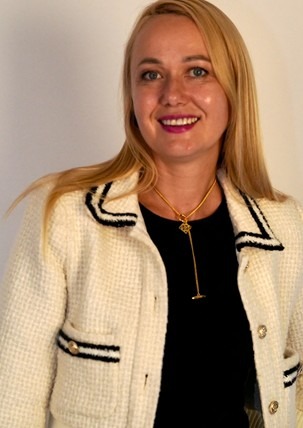
Spécialiste des investissements alternatifs, je mets en perspective immobilier et objets de luxe pour décrypter les tendances d’aujourd’hui et de demain. Pendant dix-sept ans, j’ai exercé comme agente immobilière en Ukraine, où j’ai développé une expertise approfondie du marché local, en particulier dans la sélection d’appartements et de maisons pour des investisseurs souhaitant préserver ou faire croître leur capital. Habituée à travailler avec une clientèle internationale, je maîtrise à la fois les spécificités locales, les stratégies d’investissement, les critères de rentabilité et l’analyse des risques. Installée aujourd’hui en Suisse, j’ai élargi mon champ d’expertise à l’univers des montres, de la joaillerie et des objets de luxe. Sollicitée pour des conseils dans ces domaines, j’ai étudié les grandes maisons, la valeur des matériaux, l’évolution des prix et les dynamiques propres au marché du luxe. Je propose des analyses accessibles, concrètes et orientées vers la prise de décision, en tenant compte des atouts, des risques et des spécificités de chaque forme d’investissement.