Le design au-delà du titre : développer grâce à l’IA, à la stratégie et à la transition
Si l’intelligence artificielle peut générer des mises en page, des textes et des concepts visuels en quelques secondes,... En lire plus


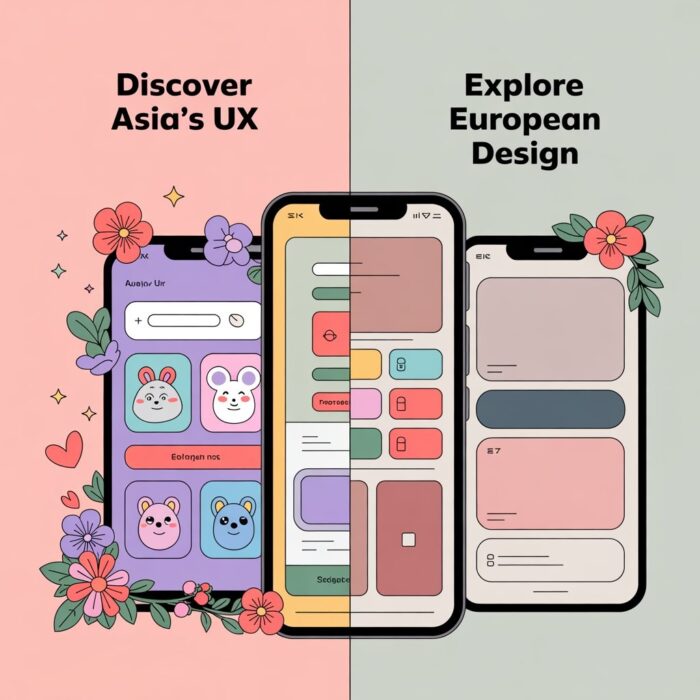
In the world of digital products, we often refer to the idea of a “universal user.” But in reality, such a user doesn’t exist. People from different countries interact with interfaces differently due to cultural and mental distinctions. These are shaped by language, national context, habits, and expectations. What works in one country might be completely unclear—or even distrusted—in another.
Cultural differences reveal themselves even in the smallest details, like colors. Green, for example, is associated with confirmation, calmness, and nature in many European countries, while in some Middle Eastern regions, it has a strong religious meaning and is linked to spirituality and luck. Red in Western cultures signals warning, whereas in Asia, it is often seen as a symbol of good fortune. Taking these nuances into account helps prevent miscommunication.
Cultural context has a significant impact on how users perceive and interact with digital products. Let’s look at several examples that illustrate how different countries and cultures shape unique design expectations.
The Swiss approach to UX is known for its precision, elegance, and restraint. Interfaces are expected to be minimalist and concise, focusing on simplicity and professionalism. Clear information presentation and logical structure help users find what they need quickly, without unnecessary distractions.
In Ukrainian cultural contexts, users often respond positively to emotion, visual dynamism, bright colors, and accent elements. Designs with vibrant visuals create a sense of energy and engagement that reflects local cultural traits and modes of information perception.
In many European countries, design often blends respect for tradition with modern technological trends. Both aesthetics and functionality matter. Users value clarity, understandability, and logical structure, but they also expect the interface to be visually pleasing and intuitive.
For example, in Northern Europe, minimalism with eco-friendly and natural colors is popular, while in Southern countries, design may be more colorful and expressive, incorporating elements of cultural identity.
American users value speed, simplicity, and efficiency. Interfaces tend to be intuitive, with bold, clearly marked buttons and helpful prompts. The design is often dynamic, using bright colors and animations that encourage action.
In Japan, interface design reflects traditional values—restraint, harmony, and balance. Interfaces are typically minimalist, with careful use of color and elements that help users focus on what’s essential without distractions.
In these regions, design must consider local symbolism, color meanings, and writing direction (usually right-to-left), which significantly affects interface structure and element placement.
Menu structure and process flow also vary: some cultures prefer vertical navigation, others horizontal. A sign-up form might only require an email in one country, while in another, users expect to provide their full name, gender, or even country of residence. Without adapting to these expectations, UX loses its effectiveness, and the user may feel confused or uncomfortable.
This means simply translating an interface into multiple languages is not enough. True adaptation begins with research: Who is our user? What environment are they in? What are their behavioral patterns? What feels “natural” to them—and what might feel strange or even inappropriate?
In today’s globalized world, UX designers need to develop a new level of empathy—cultural empathy. It’s not just a trend; it’s a necessity if we want to build products that truly work for people across the world.
So every time I design an interface, I ask myself: Am I seeing this only through the lens of my own culture? Because UX isn’t about what feels convenient to us. It’s about what feels intuitive and usable to the person who will actually live with that product every day.
By the same author: First Impressions, Lasting Conversions: The UI/UX Edge
Image: ChatGPT

Jeune professionnel du marketing et du design UI/UX, doté de solides compétences en conception web, je suis déterminé à mettre à profit et à développer mon expertise au sein d’un environnement dynamique.