From Protection to Participation: Employers Learn About the Benefits of Hiring Permit S Holders
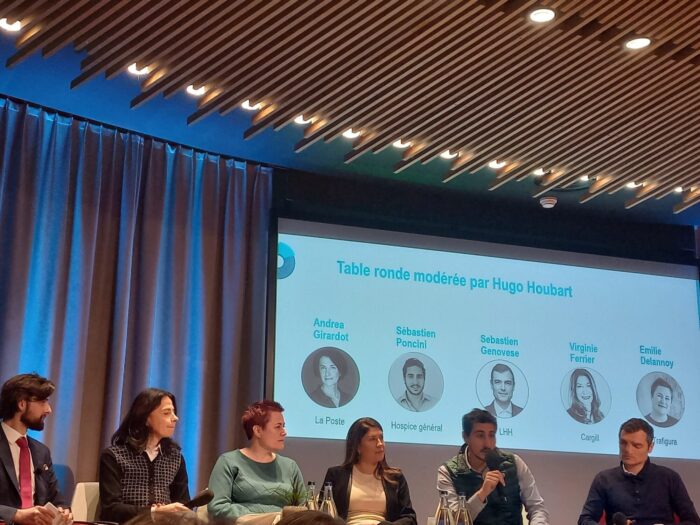
On January 13 at FER Genève, over 150 employers and HR leaders met to discuss how Permit S... En lire plus


An HR process should never become an end in itself, nor a blocker to what you want to achieve, not just in a transformation, but in any situation. It should be a means to serve a clear purpose: supporting teams, advancing the organization, and creating value.
When too rigid or excessively complex, a process produces the opposite effect: disengagement, loss of meaning and administrative overload. Conversely, a simple, clearly communicated, and adaptable process becomes a lever for responsiveness and engagement.
How can we translate these principles into practice? Through the next three articles, let's explore real HR challenges, linking research to three concrete examples from my own experience.
Organizational socialization — the process by which new employees transition from outsiders to insiders — is a major challenge. The numbers speak for themselves: according to Brandon Hall Group (2021), organizations with a solid onboarding process improve retention by 82% and productivity by over 70%. Yet according to Gallup, only 12% of employees believe their organization excels at integration.
As Oreg and Berson (2019) emphasize, leadership behaviors directly influence how employees experience organizational change, particularly the integration of newcomers.
I had to urgently rethink an onboarding process that had become counterproductive following its digitalization. Although comprehensive on paper, it generated real frustration: multiplication of emails, redundant forms, videos without support. Result: observable disengagement of newcomers from the first weeks.
By applying organizational socialization principles, we refocused the process on the essential: creating connections, welcoming humanely, transmitting values, and only then managing the administrative aspects. Personalized video messages, authentic interactions, and a human touch transformed the experience. The impact on engagement was immediate and measurable.
Question for you: Does your onboarding process truly facilitate the transition from outsider to insider, or does it simply multiply administrative tasks?
A successful onboarding process is not measured by the number of completed forms, but rather by how quickly a new employee becomes an engaged employee. Any digital transformation needs to reinforce the human aspect, not replace it.
Stay tuned to learn more...
The third article in the series will look at a silent threat: the complete lack of documented processes. When organisational memory relies on just a few individuals, business continuity is a mere illusion.
Photo credit: Istockphoto

Titulaire d'un Master en Psychologie du Travail et des Organisations et certifiée CAPM, j'accompagne depuis 13 ans les organisations à travers divers secteurs—du CICR au secteur bancaire, du trading aux cabinets d'audit—dans leurs transformations, leurs opérations RH et programmes de bien-être et de cohésion d'équipe. En tant que HR Operations Manager, j'ai développé une approche unique alliant rigueur académique et pragmatisme opérationnel. Cette double perspective m'a permis de comprendre les dynamiques humaines au-delà des apparences tout en restant ancrée dans l'action concrète. Je suis convaincue que les meilleures organisations sont celles qui placent l'humain au centre, non pas comme un slogan, mais comme une pratique quotidienne.