For Geneva NGOs, Ambiguity Has Become Too Expensive
Geneva-based NGOs are facing a new reality of tighter funding, reduced reserves and growing pressure on teams and... En lire plus

When the United States began dismantling USAID in early 2025, the effects were felt immediately in clinics, refugee camps, and food distribution centres across the world. They were also felt in Geneva. What follows traces the history of crises that have threatened the global humanitarian system, why this one is different, and how Geneva is responding.
Geneva is the operational headquarters of the global humanitarian system. It is also where that system is now crumbling.
Between 500,000 and one million people died in 2025 as a direct consequence of the dismantling of USAID, according to estimates from the Center for Global Development.
A study published in The Lancet, covering 133 low- and middle-income countries, projects more than 14 million additional deaths by 2030 if current cuts continue, including 4.5 million children under five.
It is from Geneva that the world attempts to coordinate a response to this collapse.
On November 3, 1961, President Kennedy created USAID by executive order, with the explicit goal to be an aid organization insulated from political and military pressure. By 2023, it was distributing 72 billion dollars a year, more than 40% of all humanitarian aid tracked by the United Nations.
The agency has faced abolition before. In 1995, Senator Jesse Helms introduced legislation to fold it into the State Department and cut 3.6 billion dollars from its budget. While the bill was being debated, he placed 84 informational holds on USAID projects in a single year, freezing HIV programs in Africa, democracy initiatives in the former Soviet Union, and education programs across multiple continents.
He failed, but USAID came out weakened, placed under the direct authority of the Secretary of State.
In 2015, the regional aid plan for Syrian refugees was 41% funded. Food assistance to Jordan was cut. Refugees told UNHCR field teams they had run out of options. Over a million people arrived in Europe that year. The migration crisis that followed reshaped European politics to this day.
The 2025 global humanitarian appeal sought 47 billion dollars. By mid-year, less than 17% had been received, a 40% drop from the same period in 2024. According to the OECD, the US accounted for three-quarters of the decline, its aid falling by nearly 57%.
Germany, the United Kingdom, France, and Japan followed suit. Together, the five largest donors reduced contributions in the same year for the first time on record.
Previous shortfalls had explanations: budget pressures, donor fatigue, disputes over effectiveness. This one has a different rationale: the executive order triggering the freeze described the US foreign aid system as "not aligned with American interests and in many cases antithetical to American values," and accused it of destabilizing world peace.
When Congress appropriated 50 billion dollars for foreign aid in 2026, above the administration's request, the funds were not spent. They were withheld, rescinded, or allowed to expire.
The Canton of Geneva, in partnership with the Hans Wilsdorf Foundation, created the Foundation for the Adaptation of International Geneva on 27 June 2025, endowed with 50 million Swiss francs over five years.
A further 10 million franc emergency grant was launched to help NGOs retain staff. It is an unusual intervention for a city government, and a sign that the stakes are understood locally.
At the UN level, OCHA chief Tom Fletcher launched what he called a "humanitarian reset", centred on four priorities: tighter focus, greater devolution to local actors, maximum efficiency with reduced resources, and the defence of humanitarian principles.
This resulted, in December 2025, in the US signing a memorandum of understanding committing 2 billion dollars to OCHA-managed pooled funds, since expanded to 3.8 billion, covering operations in 21 countries. While it is a significant sum, it is only a fraction of the 8 to 10 billion dollars the US previously contributed annually to the UN humanitarian system. The agreement also explicitly excludes Afghanistan, Yemen, and Gaza from receiving US funding.
In June 1859, Henry Dunant witnessed the Battle of Solferino. He returned transformed, founded the International Committee of the Red Cross, and set in motion the principles that would become the foundation of the entire humanitarian system.
What he built afterwards survived two world wars, the Cold War, and a near-abolition attempt in the 1990s. The system was built to be resilient.
Whether it emerges from this crisis intact - or as something fundamentally different - is the question Geneva is now living with.
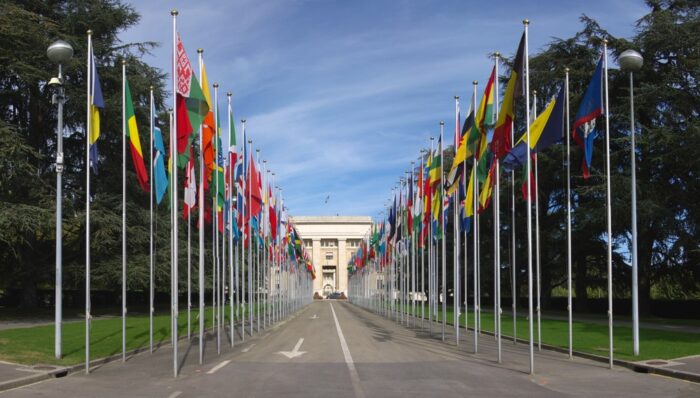
Image: rxdrew73 via DepositPhotos
Communication Officer