No More Safety Net : The Great Withdrawal
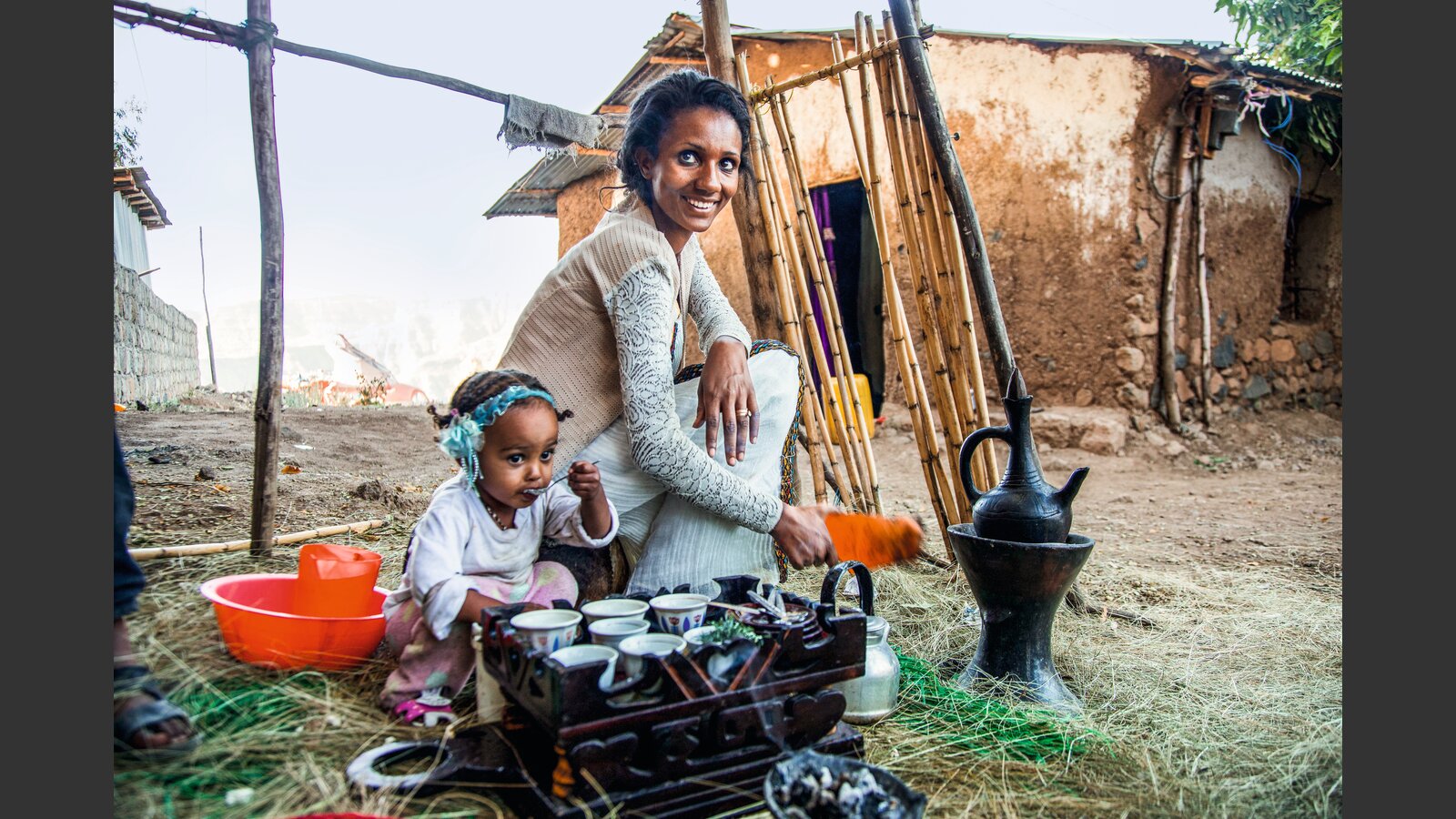
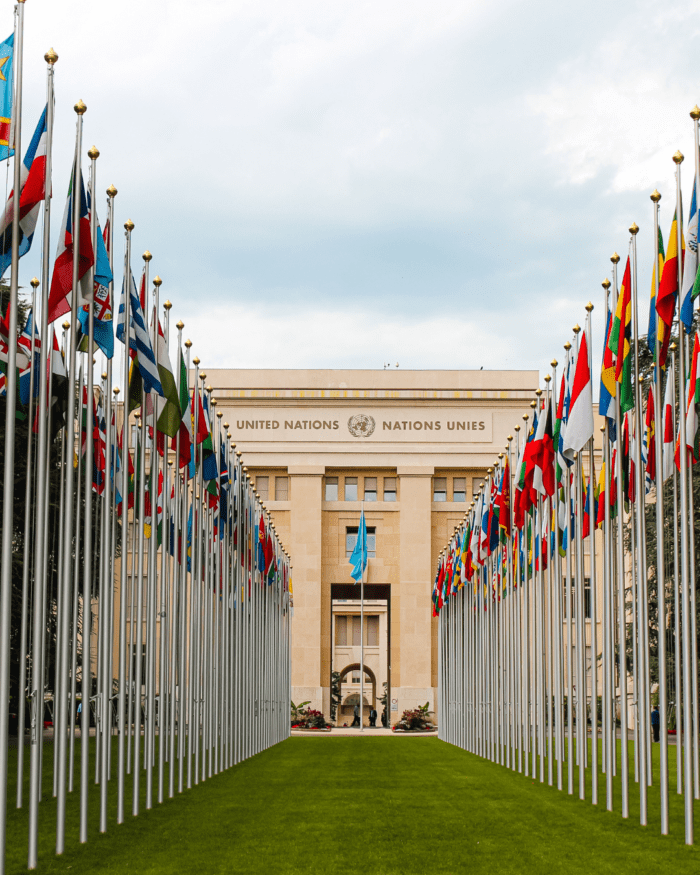
Geneva is facing one of the most serious humanitarian crises in decades as the dismantling of USAID and... En lire plus


Funding pressure is a blade: it can wound organisations. Or it can cut through the fog. The difference lies in ownership, follow-up, risk visibility and reporting that forces decisions.
The first thing a funding squeeze takes away from Geneva’s international NGO sector is not strategy.
It takes away the privilege to be unclear.
The opportunity is this:
“A phoenix does not rise because the fire is gentle. It rises because the old form can no longer survive.”
That old form is easy to recognise: a task without an owner. A meeting without follow-up. A risk was noticed too late. A report that records the past but leads to no decision. When buffers shrink, these things stop being minor operational annoyances. They start becoming expensive.
When nobody owns the decision, the organisation pays for the delay.
According to CAGI’s 2026 survey of Geneva-based NGOs, the funding pressure is no longer theoretical. It is already visible in revenues, reserves, staffing and programmes. For many organisations, the squeeze has translated into programme cuts, internal restructuring and a tangible impact on the people they serve.
The focus here is on NGOs in International Geneva, but the lessons are universal. Swissinfo has already highlighted how vulnerable Geneva-based NGOs are to decisions made by major donors, while Reuters has reported thousands of job cuts across international organisations in Switzerland. In other words, this is not temporary “turbulence”. It is a new reality of constrained resources.
The data is often read as a funding story. But it is also an execution story. Drawing on the leadership language of my Executive MBA journey at UNIGE, this is a VUCA moment: volatile, uncertain, complex and ambiguous.
In operational terms, it means that ownership, follow-up, risk visibility and reporting discipline matter more than ever.
What matters when money becomes tighter is the following:
When there are fewer people and less money, the most dangerous tasks are the ones that “seem to belong to everyone”. In practice, this usually means they belong to nobody.
One issue needs one accountable person. One concrete next step. One clear deadline.
This is not a cure-all, but it sharply reduces the chance that something important gets stuck between different parts of the organisation.
Meetings alone do not move work forward. What moves work forward is the rhythm after the meeting.
What has been done. What has not been done? What is blocked? What needs to return to the table next week instead of disappearing into a pile of slides?
In leaner teams, follow-up is often the difference between a controlled delay and a problem discovered too late.
Not every team needs a heavy risk-management framework. But every team needs simple visibility.
What is already slipping? Where everything depends on a single approval. Where today’s underfunding will become tomorrow’s problem.
When many organisations do not even have a three-month buffer, late risk detection becomes particularly costly.
Many leaders do not need another long update. They need a short signal: what has changed, what is going off track and what decision needs to be made now.
Good reporting does not simply summarise what happened. It helps leadership see faster where a priority, trade-off or intervention is required.
In this sense, a report is not an archival document. It is a management tool.
This is where the uncomfortable part begins.
Under funding pressure, old comfortable practices face a higher demand for transparency — and some become much harder to defend. In better-funded years, projects could survive with polished names, strong public narratives and unchallenged budgets.
Today, too many have become
“zombie programmes”: initiatives that keep consuming budget, staff time and management attention after their original logic has died
The symptoms are easy to recognise: unclear ownership, weak evidence of results and resources still being absorbed while everyone speaks the language of impact.
Pressure changes the rules. Vague language, slow decisions and familiar routines become expensive when money, time and trust are scarce.
This is not a wellness problem. It is surgery.
It cannot be cured with nicer wording or another polite committee. Teams unwilling or unable to leave comfortable routines and do the hard work will need new capabilities around them — or a serious redesign of how work gets done.
Funding cuts start as a purely financial problem. But quickly, they become an execution problem.
And this is exactly the moment when operations stop being a back-office topic. They become a way to protect momentum, decisions and the mission itself — when ambiguity is no longer a luxury, but an expensive mistake.
Image: OpenAi
Sources:
Centre d'Accueil de la Genève Internationale (CAGI). Navigating uncertainty and a rapidly changing global context: A Survey of NGOs in International Geneva. CAGI, April 2026.
Claire-Marie Dikanska. Is Geneva prepared for Trump's - and others' - cuts to foreign aid? SWI swissinfo.ch, 22 March 2025.
Emma Farge and Dave Graham. Once the city of peace, Geneva sees the United Nations' presence fade. Reuters, 7 May 2026.
United Nations Office at Geneva (UN Geneva). Humanitarian system at breaking point as funding cuts force life-or-death choices. UN News, 12 March 2025.
Marcia Blenko, Leslie MacKrell and Kevin Rosenberg. Operating Models: How Nonprofits Get from Strategy to Results. The Bridgespan Group, August 2019; updated February 2023.
Libbie Landles-Cobb, Mariah Collins and Bob Searle. How to Build a Nonprofit Dashboard for Your Leadership Team. The Bridgespan Group, 28 September 2023; updated September 2025.
Mike Ciccarone et al.. The RAPID Decision-Making Tool for Nonprofits. The Bridgespan Group, 13 January 2022.
Michael Allison. Strategy Needs a Plan. Stanford Social Innovation Review, 7 May 2015.

When work gets stuck between people, priorities, deadlines and unclear decisions, I help bring it back to execution.