
Retour à l'emploi : mode d'emploi - Le sommaire
Retrouvez le sommaire de notre série de l'été sur la recherche d'emploi. Vous trouverez ici tous les conseils... En lire plus

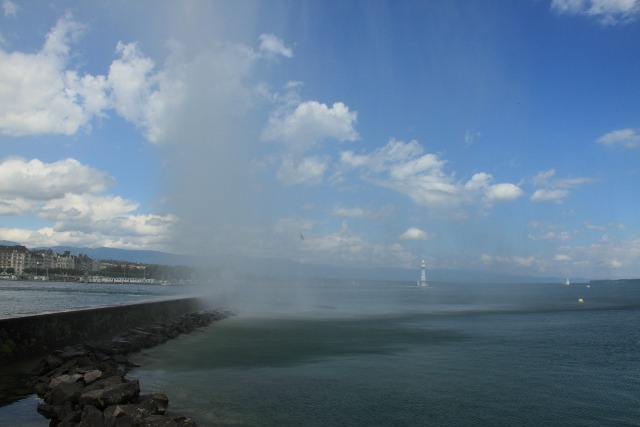 From 5 to 10 July 2015, the Symposium for European Freshwater Sciences will be held in Geneva.
François Alphonse Forel, Professor of Physiology and Anatomy at the Faculty of Sciences of the Academy of Lausanne, published the first volume of his monograph about his research on Lake Geneva “Le Leman – Monographie Limnologique” in 1892. His work included many different aspects of the lake such as ecology, sediment characteristics, water chemistry and movement. As this work was very complex and could not be integrated into any existing discipline, he aimed to establish a new scientific field concerning research on inland waters.
“The theme of my description being partially terrestrial, this subject might be considered geography. But the geography of waters is called oceanography, I could therefore call the discipline freshwater oceanography. But a lake, no matter how large it might be, is not an ocean; the limited expanse gives each lake its own proper character that is very different from the unlimited expanse of the vast ocean.”
Finally, due to lack of fit to any other research field, he created a new word for the new discipline: “limnology”.
Nowadays, freshwater sciences, which study bodies of freshwater such as lakes, ponds and running water, or limnology, which includes the study of inland salt lakes, are large research fields covering a broad range of disciplines. Freshwater sciences include disciplines related to biology, such as the ecology of microorganisms, plants, invertebrates and fish or ecotoxicology, which studies the effects of pollution on ecosystems and organisms. At the same time, it also encompasses disciplines related to geology, chemistry and physics, such as sedimentology, hydrochemistry (studying the chemical composition of water bodies), or lake modelling and monitoring.
Only 3% of all water on earth is freshwater, of which only one third is available for use, the rest being frozen in glaciers and the polar caps. Furthermore, the uses freshwater resources are put to are manifold. Not only do they provide drinking water and irrigation of agricultural land, they also support fisheries and are important for recreation. However, freshwater ecosystems are threatened by pollution, eutrophication and excessive resource use. Therefore, it is important to understand and maintain these ecosystems in a sustainable way.
In Switzerland, freshwater sciences are important, with several institutions doing research on the topic. Amongst others, there are the Swiss Federal Institute of Aquatic Science and Technology (EAWAG) in Dübendorf, the Swiss Centre for Applied Ecotoxicology, based at EAWAG and EPFL, and the F.-A. Forel Institute of the University of Geneva and the University of Applied Sciences Western Switzerland, both based in Geneva.
The European Federation for Freshwater Sciences organises a symposium every two years assembling researchers from all over Europe to communicate and exchange their advances in freshwater sciences. This year, it will take place in Geneva under the slogan “Freshwater sciences coming home”. On Wednesday 8 July at 7:00 pm in Auditorium R380 at Uni Mail, a public conference will be given by Peter Brabeck-Letmathe, Chairman of the “2030 Water Resources Group” and the board of Nestlé SA. He will speak about the challenge of promoting sustainable water use in the future.
https://en.wikipedia.org/wiki/Limnology
Vincent W.E., Bertola C. (2012) François Alphonse Forel and the oceanography of lakes. Archives des Sciences 65, 51-64.

Freshwater is indeed scarce and very valuable. It is interesting to note that despite its critical value for human kind, freshwater is widely used without much consideration.
My impression is that the most developed countries have the highest per capita consumption. At the same time, I believe that these countries have water prices that are low in comparison to their economic wealth and possibilities.
Switzerland is one of the privileged countries where, with timely focus and actions, future freshwater supply probably should not become a very critical issue.
Some other regions of the world have to deal with a much bigger burden!