Les professionnels de GBNews.ch s'allient à la puissance des technologies en intelligence artificielle générative, pour informer la communauté des affaires et le grand public, des dernières tendances et des évolutions du marché de l'emploi.

In education, artificial intelligence (AI) tools such as chatbots, AI teaching aids, automated lesson plans for instructors and electronic grading tools are being gradually adopted. There are conflicting views, however, on how and when to implement AI tools in education.
On the one hand, United Nations Educational, Scientific and Cultural Organization (UNESCO) Assistant Director-General for Education, Stefania Giannini, highlighted the critical role that educational AI tools are playing as tutors for students, co-professors for teachers and companions for both.
Simultaneously, a report by the Center for Universal Education at Brookings, A New Direction for Students in an AI World: Prosper, Prepare, Protect, raised concerns about the risk of AI undermining foundational learning in childhood, including an erosion of trust between teachers and students. The report states that an over-reliance on educational AI will erode foundational learning skills, including basic reading, writing and critical thinking.
A Balanced Approach to AI in Education
Amid concerns raised by United Nations (UN) bodies and educational stakeholders, efforts are under way worldwide to implement AI in education without jeopardising foundational learning.
The Philippines and Switzerland provide two contrasting examples of how AI tools are being introduced in education. The Philippines is introducing AI solutions in education because of a domestic literacy crisis. Meanwhile, Switzerland is evaluating the added value of using AI-assisted or automated tools in primary, lower-secondary and upper-secondary schools without diminishing foundational learning.
The Philippines: The Scale of the Literacy Challenge
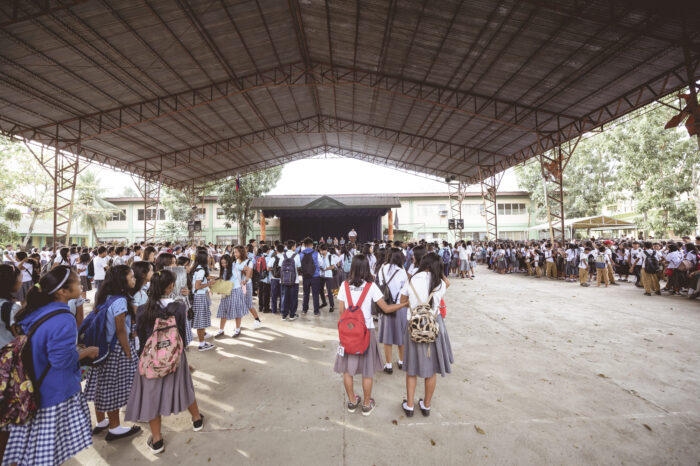
According to a report released earlier this year by the Philippines’ Second Congressional Commission on Education (EDCOM 2), a Department of Education pilot of the Grade 11 Senior High School Curriculum found that 87% of Filipino 11th graders were not independent readers. In addition, the Philippines Statistics Authority’s (PSA) 2024 Functional Literacy, Education, and Mass Media Survey (FLEMMS) reported that roughly 29.8% of Filipinos aged 10–64 (19 million) were functionally illiterate. This means that they lack the ability to read, write, analyse and demonstrate comprehension at a complex level. Furthermore, even though the basic literacy rate in the Philippines is 90% according to the 2024 FLEMMS, over 24 million Filipinos fall into the combined categories of basic and functional illiteracy.
Regional inequalities contribute to the current literacy crisis in the Philippines. Central Luzon was found to have the highest basic literacy rate, at around 92.8%, compared with a low of 81% in the Bangsamoro Autonomous Region in Muslim Mindanao (BARMM). The Organization for Economic Co-operation and Development (OECD) 2022 Programme for International Student Assessment (PISA) report highlighted notable reading gaps among teenage students, with only 24% achieving Level 2 or higher in reading comprehension, compared with an average of 74% across OECD countries. Level 2 reading refers to baseline reading skills at which students can identify the main ideas in a text.
Why AI Is Being Considered
For Filipino lawmakers, activists and policy watchdogs, this signalled the urgency of educational reform. According to the consumer advocacy group CitizenWatch Philippines, AI may be implemented to help reform the Filipino education system. Although sceptics have raised concerns about AI in education, actors in both the private and public sectors view AI-assisted tools as an opportunity to strengthen foundational learning. Switzerland provides one example of how AI tools can be introduced while maintaining safeguards around foundational learning.
Switzerland: AI Adoption and Safeguards
Late last year, schools in Switzerland adopted virtual AI teaching assistants in classroom environments. Upper-secondary students, vocational students and university-level students are assessed by virtual teaching assistants across a range of subjects such as French, history and social sciences. The objective of these AI tools is to encourage and facilitate learning among Swiss students. Switzerland’s digital infrastructure and strong digital skills among younger people may also make the adoption of AI tools easier for students.
Safeguards Around AI Use
While there is still a lack of empirical evidence of AI efficacy in primary-level classrooms, Switzerland takes a more open approach to educational AI tools than some other European countries. For example, Norway recently enacted a ban on generative AI in its elementary school curriculum to preserve foundational learning and reverse low test scores. European Union members Sweden, Italy and Denmark introduced proposals intended to limit screen time and device usage in early education to favour handwriting and the use of printed textbooks.
The Swiss education system focuses on the importance of foundational learning in pedagogical development. AI implementation in Swiss education, however, could impact how teachers and students engage in classroom settings. Guidelines have been developed for Swiss primary-level schools and institutions on the ethical use of artificial intelligence. These guidelines focus on responsible AI implementation while acknowledging the role of teachers. They also address data protection and the risks AI may pose to critical thinking and problem-solving skills.
The Philippines: Barriers to AI Adoption
Literacy and Workforce Readiness
In contrast to Switzerland, the Philippines is adopting AI measures in education to mitigate its literacy crisis. With 87% of Filipino 11th graders reported as unable to read independently, this situation could have serious implications for the country’s future workforce. AI in education remains a divisive topic in the Philippines, with educational and governmental stakeholders continuing to debate its ethical use in both public and private schools.
There are ongoing debates over whether the Philippines should focus more on ensuring that Filipino students are technologically literate by developing their skills to use AI-assisted tools and other new technologies. The Philippines is aiming to become a leading Asian innovator in AI. However, the country’s illiteracy and socioeconomic challenges could compromise its technological goals. Michelle Alarcon, president of the Analytics & Artificial Intelligence Association of the Philippines (AAAP), expressed concerns at the Globe Business “G summit 2025” event that “The Philippines’ goal to become a leader in AI and digital innovation may be held back by a more basic problem: many senior high school graduates still struggle with functional literacy”. Alarcon also highlighted what she described as the “alarming rate” at which Filipino senior high graduates struggled to retain and apply the concepts they were taught in secondary education. This raises further concerns about the future of the country’s workforce in the technology and AI sectors.
Digital Skills and Access
Although experts and stakeholders have expressed the potential for AI use to improve the literacy outcomes of Filipino students, the Philippines’ high illiteracy rate and continued widespread economic disparities may interfere with its implementation. Further barriers include gaps in access to AI, limited Information and Communications Technology (ICT) literacy and technological inequality among Filipino youth. In fact, despite a 2026 Memorandum by DepEd Region VIII focused on the rollout of AI Ready ASEAN Philippines as well as Project AGAP.AI, limited ICT skills among Filipino youth remain a barrier.
According to the PSA’s 2024 FLEMMS, the most common area of ICT proficiency among Filipinos aged 15–64 was communication, at 92.3%, including the use of email platforms and messaging applications. On the other hand, the 2024 FLEMMS also reported that digital content creation proficiency was 52.8%, while IT safety skills proficiency (i.e. preventative measures against phishing, password protection and anti-malware) stood at 64.8%. In addition, 72.6% of Filipinos were proficient in ICT-related problem-solving skills, such as Wi-Fi troubleshooting, the basic operation of computer hardware and the verification of information found online. These figures indicate significant digital-skills gaps that could complicate the widespread adoption of AI in education.
The Risk of Over-Reliance on AI
Furthermore, an International Journal of Learning, Teaching and Educational Research article reported that an over-reliance by Filipino university students on AI-generated summaries could weaken critical thinking and in-depth analysis. This connects back to concerns raised in the Center for Universal Education at Brookings report regarding the erosion of foundational learning skills. In effect, the Filipino government could examine Swiss AI guidelines when developing strategies to mitigate risks to foundational learning and critical-thinking skills.
What Can the Philippines Learn from Switzerland?
Switzerland’s approach to AI in education focuses on strengthening foundational learning while developing safeguards for the ethical use of AI. In the Philippines, AI is being considered partly as a way to address illiteracy and improve educational quality. Both countries nevertheless face questions around access, vulnerable groups and the potential effects of AI on foundational learning. There is not yet enough empirical evidence regarding the efficacy of AI-assisted education in the Philippines or how effectively AI tools can strengthen foundational learning in Switzerland.
Despite this lack of quantitative data, a case can be made for implementing AI in Filipino education to reinforce foundational learning techniques among senior high school and university-level students in the Philippines. AI resources such as virtual teaching assistants, electronic grading tools and chatbots that identify specific learning problems could be used alongside measurable reading outcomes and continuous human oversight from teachers and administrators. This combination may help mitigate illiteracy among senior high school students in the Philippines.
Educational stakeholders in the Philippines have already identified weaknesses in foundational learning as a reason why Filipino youth struggle to read independently. Filipino educators could therefore consider how their Swiss counterparts use guidelines that emphasise human oversight of AI-assisted tools, with the aim of improving literacy and learning retention.
Sources and further reading:
Philippines: literacy, education and digital skills
Philippine Daily Inquirer — K-12 a failure as Grade 11 students don’t get what they read
https://newsinfo.inquirer.net/2235958/k-12-a-failure-as-grade-11-students-dont-get-what-they-read
Philippine News Agency — National Literacy Crisis
https://www.pna.gov.ph/opinion/pieces/1118-national-literacy-crisis
Philippine Statistics Authority (PSA) — Every 10 Filipinos, 9 Have Basic Literacy, While 7 Have Functional Literacy
https://psa.gov.ph/content/every-10-filipinos-9-have-basic-literacy-while-7-have-functional-literacy
OECD — PISA 2022 Results: Country Note – Philippines
https://www.oecd.org/en/publications/pisa-2022-results-volume-i-and-ii-country-notes_ed6fbcc5-en/philippines_a0882a2d-en.html
Second Congressional Commission on Education (EDCOM 2) — Around 18M Filipinos Finished High School Despite Being Functionally Illiterate
https://edcom2.gov.ph/around-18m-filipinos-finished-high-school-despite-being-functionally-illiterate/
Second Congressional Commission on Education (EDCOM 2) — Student Proficiency Rates Plunge from 30% in Grade 3 to 0.47% in Grade 12
https://edcom2.gov.ph/student-proficiency-rates-plunge-from-30-in-grade-3-to-0-47-in-grade-12/
Philippine Statistics Authority (PSA) — Proportion of Youth and Adults with ICT Skills: Results of the 2024 Functional Literacy Survey
https://psa.gov.ph/content/sdg-441-proportion-youth-and-adults-ict-skills-type-skills-results-2024-functional-literacy
UNESCO — Readiness Assessment Methodology: Philippines
https://www.unesco.org/ethics-ai/en/philippines
Department of Education, Region VIII — National Rollout of Artificial Intelligence (AI) Ready ASEAN Philippines and the Implementation of Project AGAP.AI
https://region8.deped.gov.ph/2026/02/26/feb-25-2026-rm-no-250-s-2026-national-rollout-of-artificial-intelligence-ai-ready-asean-philippines-and-the-implementation-of-project-agap-ai/
Microsoft — How AI Is Powering a Literacy Breakthrough in the Philippines
https://news.microsoft.com/source/asia/2025/06/23/how-ai-is-powering-a-literacy-breakthrough-in-the-philippines/
The Philippine Star — Literacy Issues Threaten Philippines’ AI and Digital Innovation Goals
https://www.philstar.com/the-freeman/cebu-business/2025/07/21/2459577/literacy-issues-threaten-philippines-ai-and-digital-innovation-goals
International Journal of Learning, Teaching and Educational Research / ResearchGate — Boosting Reading Comprehension Through AI-Based Learning Tools
https://www.researchgate.net/publication/396001684_Boosting_Reading_Comprehension_Through_AI-Based_Learning_Tools
Economist Impact / Economist Enterprise — Bridging the Skills Gap: Fuelling Careers and the Economy in the Philippines
https://insights.economistenterprise.com/trade-geopolitics/bridging-skills-gap-fuelling-careers-and-economy-philippines
Switzerland: education, digital skills and AI
Swiss Federal Administration — Swiss literacy statistics
https://www.bsv.admin.ch/en/newnsb/JrHo0f0D4ssv3Nu8Ee678
Swiss Federal Department of Foreign Affairs — Switzerland’s Education System
https://www.aboutswitzerland.eda.admin.ch/en/switzerlands-education-system
EPFL — Guidelines for the Use of AI in Teaching at EPFL
https://www.epfl.ch/education/teaching/index-html/ai-teaching/guidelines-for-the-use-of-ai-in-teaching-at-epfl/
SWI swissinfo.ch — New AI Specialist Training Course Launched in Switzerland
https://www.swissinfo.ch/eng/ai-work/new-ai-specialist-training-course-launched-in-switzerland/90922266
Swiss Premium Education — AI and the Swiss Classroom: Where Innovation Meets Tradition
https://swisspremium.com/news/swiss-premium-education/ai-and-the-swiss-classroom-where-innovation-meets-tradition/
Alp ICT — Switzerland Among the World’s Leading Nations in ICT
https://alpict.ch/en/la-suisse-parmi-les-meilleures-nations-au-monde-dans-le-domaine-des-tic/
AI and education: international perspectives
UNESCO — AI and the Future of Education: Disruptions, Dilemmas and Directions
https://www.unesco.org/en/articles/ai-and-future-education-disruptions-dilemmas-and-directions-0
UNESCO / Digital Learning Week — Digital Learning and AI in Education: UNESCO’s Integrated Vision — opening address by Stefania Giannini, Assistant Director-General for Education
https://www.youtube.com/watch?v=_Tx_iwvkvBM
Center for Universal Education at Brookings — A New Direction for Students in an AI World: Prosper, Prepare, Protect
https://www.brookings.edu/articles/a-new-direction-for-students-in-an-ai-world-prosper-prepare-protect/
Additional background sources
GlobalTenders — Economy of the Philippines
https://www.globaltenders.com/economy-of-philippines
Batasko — Philippines Poverty Data
https://batasko.com/data/poverty
Barchart — Is the AI Bubble Really About to Burst? What the Dot-Com Crash Tells Us About Your Money in 2026
https://www.barchart.com/story/news/3170419/is-the-ai-bubble-really-about-to-burst-what-the-dot-com-crash-tells-us-about-your-money-in-2026
Images: Photos, illustrations et art vectoriel - Philippines school | DepositPhotos

Specialization in international advocacy, human rights, and technology with administrative, research, and analysis skills.