Les professionnels de GBNews.ch s'allient à la puissance des technologies en intelligence artificielle générative, pour informer la communauté des affaires et le grand public, des dernières tendances et des évolutions du marché de l'emploi.

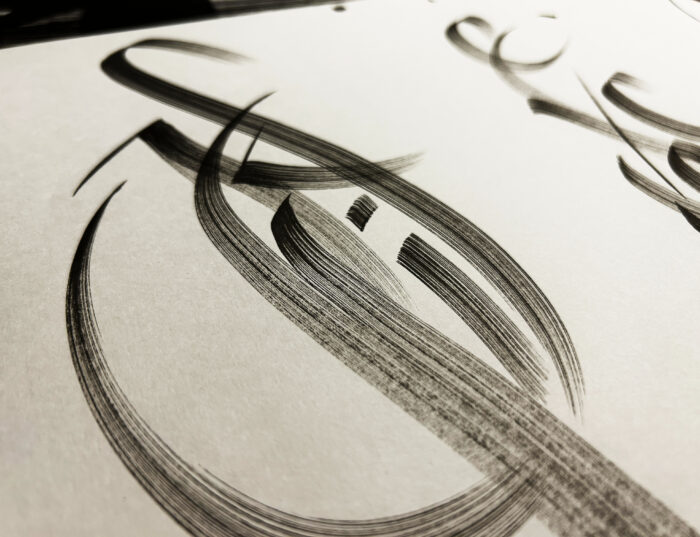 When Hermès recently unveiled a temporary rebrand of its website featuring hand-drawn illustrations by Linda Merad, a young French artist, the global reaction was immediate and overwhelmingly positive.
In an era where AI and computer-generated imagery offer a calculated, often sterile perfection, the world responded with a collective sigh of relief. We weren’t just celebrating a new look; we were celebrating the return of the human pulse to the digital screen.
By identifying the underlying principles behind such a shift, this article aims to improve our understanding of what gives hand-made design such evocative power and how craftsmanship can be used as a decisive edge in digital branding.
While AI creates a perfect average based on calculation, humans create a “perfect” anomaly: an intentional variation that enriches and gives meaning to an otherwise bland and predictable pattern. As a designer who strives to maintain a "man-made" quality, whether through the initial sketch or a final hand-lettered logotype, one of my main concerns regarding AI-assisted creations is that they lack the anchor of real-life experience.
Narratives are what help us connect. Creation by hand is always part of a story because it is a unique event captured in time that can never truly be replicated. Hand-made creations tap into our collective memory. They bring us back to childhood, a time of unbridled creativity before it was stifled by the process of growing up and conforming.
Unlike its derivative and calculated counterpart, human creation is the transfer of an emotional state. It is the manifestation of all the stories we have ever been part of, each of them a potential point of connection with the viewer.
Where generative software offers a representation of a skill, the human artist offers an intentional reflection of a life lived, with every line drawn acting like a signature.
Humans respond emotionally to sensory stimulation. As creators, we do not simply display a skill; we transcribe our journey, our sensitivity, our hurts, and our joys into the work. A manual skill represents a dedication that commands respect, as acquiring a craft is a long, vulnerable process shaped by doubt, anxiety, and personal expression.
This process translates into a presence that accompanies the viewer, providing a level of warmth and rational reassurance that technology, for all its speed, cannot replicate. Hand-made creations feel like more than the incarnation of a skill; they are the manifestation of the desire to craft something tangible, a desire as old as our time on earth.
Because craftsmanship evokes something that can be touched, it offers a feeling of tangibility and safety even through digital space. It provides visual friction in a world that has become too "slippery" and fast.
In design, it is not only the final result that matters, but also the process of understanding a product, the user’s motivation, and the stories that emerge from it before translating them into evocative visuals. In a world of infinite, automated iterations, the "uncertainty" of the human process is our greatest strength. It is proof that a person was here.
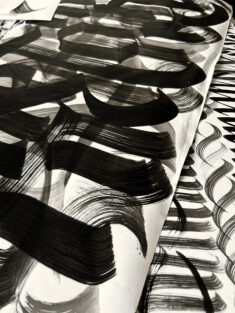 The Human-Centric Act of Resistance
When the world zigs, zag.
This classic line, coined by legendary ad agency BBH for Levi’s, dates back to 1982 but rings truer with each passing year.
However, we must view the continuation of graphic craftsmanship not merely as a reaction to AI, but as a profound belief that hand-made creation is an essential part of mankind’s sense of expression. It can act as a layer of authenticity, both literally and figuratively, by contributing to the feeling that a product or service is human-centric.
The people who develop a brand or a product do so because they believe it can add something to people’s lives. Whether they are improving a service or a product, they share the customer’s perspective, struggles, and aspirations.
It seems that even if technology and AI serve a role within a project, one of the emerging advantages from a communication standpoint is the ability to convey that, at the core of the initiative, sits a human concern: the desire to improve an experience shared by all.
From a design standpoint, it means either following the AI-generated trend and risking going unnoticed, or staying ahead of the curve by harnessing the power of hand-made creation in order to craft unique visual narratives that stand out from the crowd.

Combining the traditional graphic arts with strategic thinking made me fall in love with logo design and branding.