
How International Geneva Shapes Global Governance
International Geneva is the world’s leading hub for multilateral diplomacy, uniting international organizations, permanent missions, NGOs, and experts... En lire plus

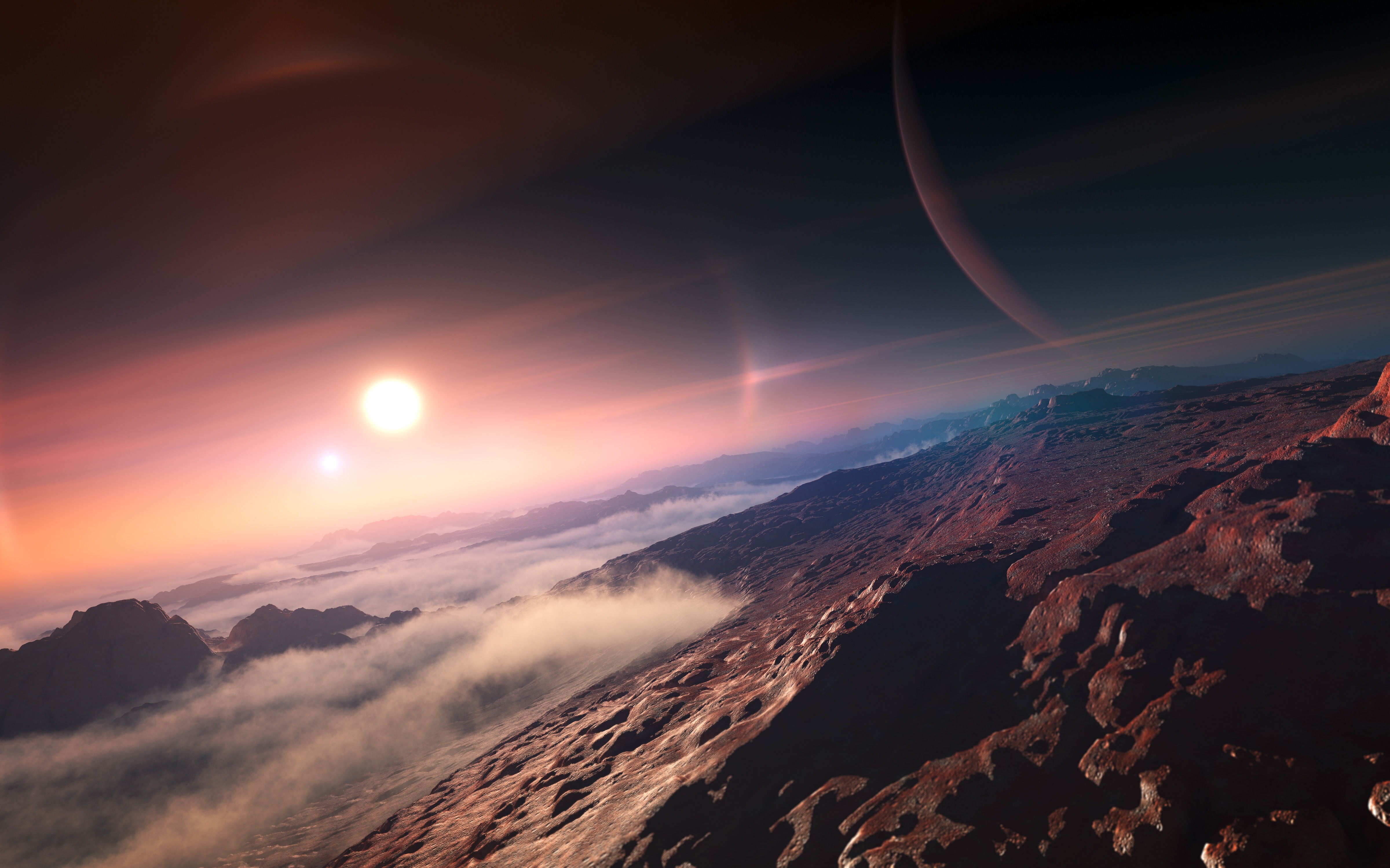
An astrological research team has announced the discovery of a new solar system that includes a planet that could be ‘habitable’ some 31 light-years from Earth. This discovery is based on data from NASA's Transiting Exoplanet Survey Satellite (TESS) satellite.
How habitable a planet could be depends on several factors. These include whether the planet has soil or just rock on the surface (soil is preferable), its size (it should not have a low mass), and it has to be a comfortable distance away from a star (lie in the Habitable Zone) so that the temperature is conducive to the presence of liquid water - the key ingredient to sustaining life.

The newly discovered solar system is dominated by GJ 357, a dwarf sun. The star has three confirmed exoplanets in its orbit, one of which, GJ 357 d, is considered to be a "Super-Earth" within the circumstellar habitable zone. The researchers believe it holds all the characteristics of a planet that could harbor life and be amenable to humans if we ever visited. The system is part of the Hydra constellation.
“With a thick atmosphere, the planet GJ 357 d could maintain liquid water on its surface like Earth, and we could pick out signs of life with telescopes that will soon be online,” says Lisa Kaltenegger, the director of the Carl Sagan Institute at Cornell and an associate professor in astronomy. “If GJ 357 d were to show signs of life, it would be at the top of everyone’s travel list—and we could answer a 1,000-year-old question on whether we are alone in the cosmos.”
There are different ways to find exoplanets. The most common is Transit Photometry. This method detects distant planets by measuring the minute dimming of a star as an orbiting planet passes between it and the Earth. If dimming is detected at regular intervals and lasts a fixed length of time, then a planet is probably orbiting the star and passing in front of it once every orbital period.
Source:
“Découverte d'une planète potentiellement habitable", Tribune de Genève
Transit Photometry - A Method for Finding Earths, Planetary.org
Confirmation of Toasty TESS Planet Leads to Surprising Find of Promising World, NASA
Photos: NASA