Sustainability Regulations in Commodities: A Double-Edged Sword?
Creating a just transition—where environmental sustainability is achieved while ensuring that no one is left behind—has proven to... En lire plus

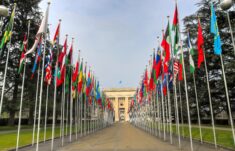
International Geneva’s strength lies in its unique ecosystem, where over 40 international organizations, nearly 184 permanent missions, and hundreds of NGOs interact daily to advance multilateral cooperation.
Nestled on the shores of Lake Geneva, the city has long been synonymous with international cooperation. Its role as a hub for multilateral diplomacy dates back more than a century, evolving from humanitarian origins into a central pillar of global governance in the 21st century.
The story begins in the 19th century with the founding of the International Committee of the Red Cross (ICRC) in 1863, followed by the adoption of the first Geneva Convention in 1864. These milestones established Geneva as a neutral ground for humanitarian action. After World War I, the League of Nations was founded here in 1919, marking the city’s entry into broader international diplomacy. Although the League ultimately failed, its legacy endured when the United Nations selected Geneva as the site of its European headquarters in 1946.
The Palais des Nations, originally built for the League of Nations, became the United Nations Office at Geneva (UNOG), now the largest UN duty station outside New York.
Today, International Geneva hosts around 40 international organizations, nearly 184 permanent missions representing states, and more than 400 NGOs. This dense ecosystem facilitates thousands of meetings annually—over 6,000 conferences in recent years—drawing hundreds of thousands of delegates.
Key institutions such as the World Health Organization (WHO), headquartered in Geneva since 1948, and the World Trade Organization (WTO), established in 1995, underscore the city’s pivotal role in global governance.
In the post–World War II era, Geneva’s neutrality—rooted in Switzerland’s long-standing policy—made it an ideal venue for East–West dialogue during the Cold War. Negotiations on disarmament, human rights, and trade flourished here.
In the 21st century, this role has expanded in response to globalization’s complexities. Challenges such as climate change, pandemics, and digital governance require collective action that transcends national borders. Geneva’s concentration of specialized agencies provides the infrastructure for such multilateral efforts.
At the core of International Geneva’s influence are its flagship organizations: UNOG, WHO, and WTO. Together, they illustrate how the city drives multilateral diplomacy by negotiating agreements that bind nations in areas ranging from health and trade to security and governance.
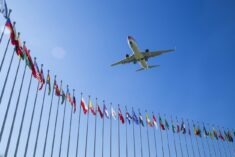
The United Nations Office at Geneva serves as the UN’s diplomatic nerve center in Europe. It supports the Conference on Disarmament—the only multilateral forum for negotiating arms control treaties—and hosts sessions of the Economic and Social Council. In 2025, amid rising geopolitical tensions, UNOG continues to facilitate dialogue on emerging issues such as cybersecurity and outer space governance.
This dense institutional concentration fosters collaboration unmatched elsewhere. The Palais des Nations acts as the ecosystem’s epicenter, hosting thousands of meetings each year. Specialized agencies such as WHO and WTO operate nearby, enabling seamless cross-sector dialogue.
WHO, with its iconic headquarters overlooking Lake Geneva, leads global health governance. The WTO, housed in the historic Centre William Rappard, oversees the rules-based trading system governing over 98% of global trade. Recent developments—such as progress on fisheries subsidies and extensions of e-commerce moratoriums—highlight Geneva’s enduring role in trade diplomacy.
In 2025, under the leadership of Director-General Ngozi Okonjo-Iweala, the WTO continues to address calls for reform, including restoring dispute settlement mechanisms and responding to rising protectionism.
This ecosystem has proven especially vital amid today’s global challenges. Trilateral cooperation between WHO, WIPO, and WTO intensified in 2025, with joint briefings for diplomats on the intersections of health, trade, and intellectual property, particularly in areas such as pandemic preparedness and access to medicines.
Permanent missions play a critical role, with diplomats engaging across multiple forums, while NGOs contribute expertise and advocacy, amplifying voices in human rights and environmental negotiations. Beyond these, organizations such as the International Labour Organization (ILO), International Telecommunication Union (ITU), and UNHCR contribute to labor standards, digital governance, and refugee protection.
This proximity enables meaningful “cross-fertilization,” as diplomats and experts move fluidly between meetings, fostering integrated and pragmatic solutions.
In 2025, International Geneva has emerged as a leader in science diplomacy, integrating scientific foresight into multilateral processes to address 21st-century challenges such as artificial intelligence, climate change, and biotechnology.
Events such as the RightsX Summit, held in December at the historic Palais Wilson—home to the Office of the High Commissioner for Human Rights—highlighted how technology, data, and partnerships can advance human rights in the digital age. Similarly, GESDA’s Geneva Science Diplomacy Week underscored growing momentum around anticipatory governance. Participants debated sovereignty in an era of rapid technological change, including calls for new international norms on gene editing and outer space governance.
UNOG Director-General Tatiana Valovaya emphasized the importance of multilateralism in addressing digital divides and algorithmic bias, ensuring that technological progress delivers equitable benefits.
Geneva’s institutional density facilitates this integration. WHO advances health innovation, while the WTO navigates the trade implications of green and emerging technologies. Trilateral WHO–WIPO–WTO cooperation expanded its briefings to help diplomats better understand these complex nexuses.
Throughout 2025, initiatives such as computational diplomacy sessions at the University of Geneva explored quantitative tools for foreign policy analysis. Amid geopolitical tensions, science diplomacy increasingly offers neutral ground for dialogue. GESDA’s anticipatory approach, including its Science Breakthrough Radar, helps policymakers prepare for dual-use risks linked to emerging technologies.
As power increasingly shifts toward technology firms and regional blocs, Geneva’s science diplomacy ecosystem positions it to foster shared purpose and ensure multilateralism evolves alongside scientific progress.

As 2025 draws to a close, International Geneva stands at a crossroads, poised to help reform and renew multilateralism amid geopolitical fragmentation and growing skepticism.
UNOG’s packed calendar—from human rights sessions to environmental negotiations—confirms Geneva’s continued operational centrality. Events such as Geneva Science Diplomacy Week and the GESDA Summit bring diplomats, scientists, and stakeholders together to anticipate emerging issues, including quantum computing and AI governance.
From the legacy of the Geneva Conventions to today’s focus on technology and sustainability, the city continues to demonstrate the enduring relevance of multilateral diplomacy. Switzerland’s support for anticipatory and inclusive approaches further strengthens Geneva’s role as a laboratory for future governance.
Despite mounting challenges, International Geneva remains a beacon of inclusive diplomacy. Its track record—from foundational humanitarian law to modern multilateral treaties—underscores its vital role in global affairs. As interdependence deepens, Geneva will continue shaping collective responses, proving that neutral, collaborative hubs remain essential for addressing the complex challenges of the 21st century.
Images:
Photos, illustrations et art vectoriel - International geneva | DepositPhotos
Professionnelle multilingue avec une expérience internationale dans le soutien aux cadres supérieurs dans divers secteurs.