From Protection to Participation: Employers Learn About the Benefits of Hiring Permit S Holders
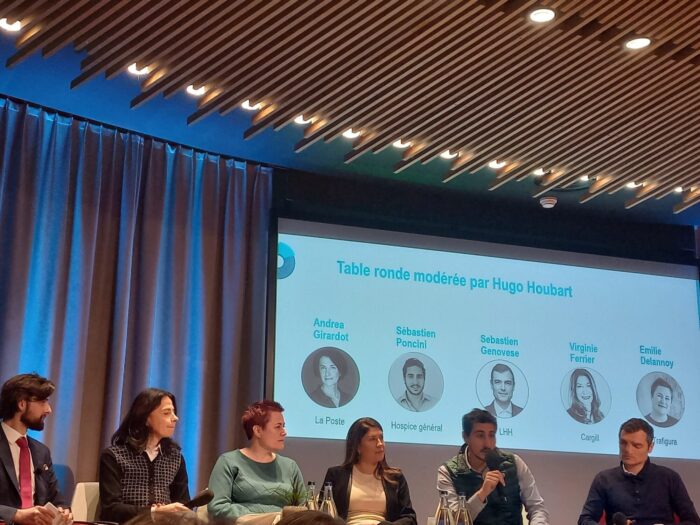
On January 13 at FER Genève, over 150 employers and HR leaders met to discuss how Permit S... En lire plus


Pour lire la version française, cliquez ici.
In Switzerland, the Programme d’Aide Vers l’Emploi (PAVE) provides an opportunity for greater integration of refugees and asylum seekers into the workforce.
PAVE offers financial incentives, administrative support, and professional guidance to help employers hire from the talent pool among refugees. It is implemented locally by the Hospice général, in collaboration with the Bureau de l’intégration et de la citoyenneté (BIC).
This mechanism has proven effective in reducing employer costs while promoting diversity in the workforce.
This article explores the application of PAVE in Geneva, detailing its mechanisms, the roles of key institutions like the Office cantonal de l’emploi (OCE) and the Hospice général, and highlights participating companies.
PAVE’s goal is to bridge the gap between skilled migrants and the Swiss job market.
By subsidizing a portion of the salary, PAVE effectively reduces the financial burden on employers, making it more attractive to hire from this talent pool.
The initiative recognizes that many asylum seekers possess valuable skills but face structural obstacles. PAVE not only provides economic incentives but also supports training and coaching to ensure long-term success. The program is part of a national effort to strengthen asylum seekers’ employment rates.
PAVE addresses persistent challenges for both refugees and employers:
The program creates a win-win situation: motivated candidates gain stable employment, and employers can access skilled, committed workers with financial support.
PAVE offers a salary subsidy that covers 40% of the gross salary for the first six months of employment (up to 12 months for candidates aged 50+).
However, a company must commit to offering:
Other benefits include:
All contracts must comply with current labor conditions in Geneva and be maintained for at least 12 months after the financial support ends.
The procedure is designed to be simple and fast: after signing the employment contract, the company only needs to send a notification via EasyGov to the Swiss authorities before the employee can start work.
By reducing financial risk and providing structured support, PAVE encourages long-term hires rather than temporary placements, fostering sustainable integration.
Companies interested in receiving financial support to hire new talent can contact the Contact Business Department of the Hospice général by phone at 022 420 60 60 or by email at pave@hospicegeneral.ch
PAVE targets individuals from the asylum domain:
Permit B: Recognized refugees with residency rights.
Permit F: Provisionally admitted persons whose asylum claims were rejected but cannot be repatriated.
Permit S: Temporary protection status, primarily for displaced Ukrainians.
The program does not apply to standard work permits (L or G) or non-asylum migrants.
Employers in Geneva can hire under PAVE by following a structured, low-risk process facilitated by the Hospice général.
Identify an Eligible Candidate
Source candidates through Refugees@Work, Hospice général referrals, or job centers.
Verify their permit type (Permit B, Permit F, Permit S) and completion of initial integration steps (e.g., language courses).
Assess Job Fit
Offer a permanent contract (CDI) with at least 80% workload (50% possible in special cases).
Ensure the salary aligns with Swiss labor standards.
Plan for a minimum employment period of 18 months (including the subsidy).
Consult the Hospice général
Contact via pave@hospicegeneral.ch for personalized guidance.
Advisors confirm eligibility, review documentation requirements, and suggest suitable candidates.
Submit Application
Prepare the file with candidate CV, permit details, prior integration evidence, job description, draft contract, and company information.
For Permit F, obtain cantonal approval from the Office cantonal de la population et des migrations (OCPM) if necessary.
Receive Validation
Hospice général reviews the application (2–4 weeks).
Upon approval, subsidies are confirmed, and adjustments may be suggested.
Hire and Onboard
Sign the contract and begin employment.
Provide mentoring or language support during the subsidy period.
Receive Subsidy & Fulfill Commitment
Subsidies are paid monthly or quarterly based on payroll evidence.
Maintain employment for at least 12 months post-subsidy.
Monitor & Report
Submit progress reports if requested.
Consult the Hospice général for assistance with any challenges.
This process ensures a smooth experience for both employers and employees, minimizing risk while promoting integration.
Many local companies and public entities have successfully implemented PAVE:
Helvetia Environnement: hires asylum-domain candidates, including Permit S holders, for operational roles. The partnership with the Hospice général allowed the company to integrate motivated employees into their teams effectively.
Service des Espaces Verts, Commune du Grand-Saconnex: uses PAVE for maintenance, landscaping, and entry-level skilled work. Public entities can benefit similarly, showing PAVE’s versatility.
FER Genève network: private sector companies across construction, hospitality, administration, and services use PAVE subsidies to hire candidates, often promoted through workshops and HR-focused events.
Broader promotion occurs through events by CCIG and Refugees@Work, attracting HR from private and public sectors. While exact participant lists remain limited publicly, the program’s appeal lies in its risk reduction for employers hiring motivated candidates from Ukraine and other backgrounds.
PAVE’s application to Permit S has helped shift reliance from social aid toward self-sufficiency, supporting Geneva’s inclusive economy goals. Challenges persist—such as lower cantonal employment rates compared to national averages and the provisional nature of the status—but ongoing enhancements (e.g., new flyers in 2025 and intensified cantonal plans) signal continued commitment. This targeted use underscores PAVE’s adaptability, making it a cornerstone for integrating Ukraine’s displaced population into Geneva’s workforce.
International organisations tend to recruit through their own systems, and support refugee integration mainly via partners or CSR. Even though PAVE is open to all employers (including NGOs), none of Geneva’s international organisations have applied so far—and in 2025, no NGO requests were submitted either.
That’s a missed opportunity. In a city packed with global institutions, PAVE offers a simple, subsidised, Swiss-compliant way to hire talent—including refugees—while boosting social impact and diversity goals.
Since its rollout, PAVE has:
The PAVE initiative is more than a subsidy program: it is a bridge between motivated, skilled refugees and Geneva’s labor market, providing tangible benefits for both employers and employees. By following the structured steps and leveraging advisory support, companies can hire confidently, reduce onboarding risks, and contribute to a more inclusive and diverse economy—demonstrating that strategic public programs can drive meaningful social and economic change.
By the same author:
🧾 From Protection to Participation: Employers Learn About the Benefits of Hiring Permit S Holders
🧾 How International Geneva Shapes Global Governance
Image: Job and key concept — Stock Photo © alexskopje #21442883

Professionnelle multilingue avec une expérience internationale dans le soutien aux cadres supérieurs dans divers secteurs.