
Unpacking Imposter Syndrome and Reclaiming Your Worth
Have you ever hit a milestone, only to feel like you don’t quite deserve it? Like at any... En lire plus

In 2010, humanity passed a milestone when obesity became a bigger public health problem than hunger . To put this into perspective with other non-communicable causes of illness, the estimated costs of obesity exceeds that of alcohol related illness by $0.6 trillion:
The extent of the issue was highlighted in an updated study, published in 2014, which looked at data from 1980 to 2013. The report found that some 2.1 billion people, or 30 percent of the world, are obese or overweight. In an analysis of this study, McKinsey; ‘How the world could better fight obesity’, they estimated the cost of this obesity pandemic to be approximately $2.0 trillion a year, amounting to 2.8% of world Gross Domestic Product (GDP).
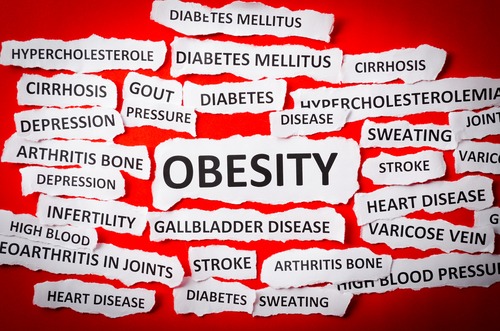 In a report, Sugar Economics: How Sweet It Isn’t, by Morgan Stanley, May 2015, found that obesity drives up healthcare costs, especially cardiovascular diseases (heart disease and strokes) and diabetes. In their report, diabetes and obesity was called ‘Diabesity’ as the pandemic of both diseases is growing hand-in-hand. High sugar consumption is thought to be one of the main drivers of this problem.
This growing pandemic is explored in a film, ‘The Secrets Of Sugar’ (voted Best Documentary of 2015 by the Science Channel of National Geographic). The filmmakers demonstrated a strong growth correlation between sugar consumption, and the increase in obesity and Type 2 diabetes, as well as other non-communicable diseases. According to a report by the World Health Organisation (WHO), June 2016, obesity has also been linked to the increased risk of Musculoskeletal disorders and to some cancers such as liver, gall bladder breast and colon cancer.
There are other costs arising from obesity. Obesity is believed to aggravate the ‘poverty and inequality trap’, creating a cycle whereby lower income and poor education drives people to eat cheap, nutrient deficient, high carbohydrate food, provoking illness, increasing health costs, lowering the ability to work, thus reducing income, and creating a downward spiral. This is backed up by many profile analyses that demonstrate obesity is more prevalent in low to middle income groups.
The Morgan Stanley report states that diabetes is one of the major illnesses thought to be directly linked to obesity. The healthcare and support costs of this disease have been calculated at $825 billion, in a report published in the Lancet in April 2016 . This cost analysis, however, did not take into account the large number of lost productivity days caused by diabetes.
The researchers found that from 1980 to 2014, diabetes among men rose by more than 209% and in women by 158%. The total number of adults with the disease rose some 400% to 444 million people. It was determined that almost half of these adults lived in five countries: China, India, the US, Brazil and Indonesia. The main areas which saw dramatic increases included the Pacific Island Nations, the Middle East and North Africa. The good news for Western Europe is that the rise was relatively small. Diabetes was lowest in Switzerland, Austria, Denmark, Belgium and the Netherlands. Overall, however, the figures still showed an increase.
In July 2016, the International Foundation of Mediterranean Diet (IFMeD), held their first world conference in Milan. This was a call for action on revitalizing the ‘Mediterranean Diet’. The outcome was the presentation of a revised food pyramid, with the intent to adopt the Mediterranean Diet. The model also focuses on the benefits for both the planet and society by advocating locally sourced ingredients. Nuts, seeds and olive oil are now recommended daily foods with sugar based products and meats relegated to a maximum of twice weekly consumption. In Australia, their food pyramid guidelines, issued in 2013, took added sugar and salt out of the equation as they are not required in a healthy lifestyle.
Economic projections to 2035 made in the Morgan Stanley report estimated the cumulative output losses in GDP due to ‘Diabesity’ if the diseases progress at current rates. For example, in a high sugar consumption scenario, Chile’s cumulative loss of GDP would exceed 30%.
For the Organisation for Economic Co-operation and Development (OECD) group of countries, there is some relatively good news for Switzerland. In terms of global ranking with regards to estimated economic output loss, Switzerland is expected to be 2nd from bottom at approximately 11% of GDP, beaten only by Japan at approximately 6%. However, this is still a lot of money as the Swiss GDP currently stands at around $670 billion, so 11% would be a cumulative cost of $73 billion. The countries at greatest risk are Chile, the Czech Republic, Mexico, the US, Australia and New Zealand.
The report also looked at the expected growth rate in the OECD in a high sugar consumption scenario, and found that GDP growth would fall from 2.3% per annum to 1.3%.
In an attempt to tackle childhood obesity, the Chilean government in June 2016 controversially banned Kinder Surprise and Happy Meals. Currently, 25% of six year olds in Chile are overweight. The government’s concern in particular is against the direct-marketing of unhealthy food to children by private companies using cartoons, bright packaging and free toys. Additionally, in parts of Europe and the US, high-sugar soft drinks are being taxed in a bid to lower consumption.
At the WHO in Geneva, employees have enrolled in a Walk The Talk programme to demonstrate that the organization is following their own advice to move more and eat healthier food. In partnership with the Global Corporate Challenge from Get The World Moving organization, over 500 employees have signed up and taken the challenge in teams, to walk 10,000 steps a day, to take the stairs instead of lifts, and eat healthily. In addition, to support their advice to limit sugar to a maximum 25g per day (6 teaspoons, or less than 1 can of soda) all sugary drinks have been removed from the vending machines at the WHO.
Individuals and governments are becoming more aware of the dangers we face due to obesity. The Swiss parliament, for example, has signed a memorandum of understanding with 10 Swiss food producers to reduce the amount of sugar, salt and fat in their products. This is possibly an action that should be replicated by other governments in a bid to stem growing health costs.
On a further positive note, in Challenging the traditional food pyramid I referenced an article by Credit Suisse stating that public behavior is changing for the better. Consumers are increasingly choosing fat and proteins over carbohydrates and vegetable oils. This is because we now know, and consumers are more aware of, the fact that fat and cholesterol in our diet do not convert to fat and cholesterol in our bodies. If this trend continues and grows, not only will we save on health costs, but more importantly, peoples’ quality of life will improve.
Notes:
According to the Global Burden of Disease study published in the Lancet Medical journal.
This study was led by scientists from Imperial College London, and involved Harvard T.H. Chan School of Public Health, the WHO and nearly 500 researchers across the globe and incorporated data from 4.4 million adults in most of the world’s countries.
Photo credit: tomkawila via Shutterstock.com

Being a mother and having recently gone for a "routine" check up and told I am way overweight and pre diabetic, I can really see the logic in this article. I always had sugar as comfort food and my children are the same. I think for most people they need a health wake up call. Until the doctor actually says "your blood sugar is too high" or "You have type 2 diabetis they never take anything seriously. It's funny how just walking an hour a day makes a big difference. Eating healthy seems to be expensive and time consuming in terms of cooking but the hours spent with the doctors and the cost of medication that comes from eating the wrong things is even worse.
Thanks Mercy. I am actually trying to set up a business around a support network for people who want to cut out processed food (hidden sugar) and go low carb to lose weight with the main aim to feel great. It is not about cutting down and starving yourself, it is about making small changes to the ingredients used. e.g. swapping cous cous with quinoa, using nuts and dates (sweet but containing fibre and nutrients) to make cakes, butter instead of margarine. I have a NOSH ROCKS group on Facebook if you are interested or you can find me on linked. Best Regards, Rowana