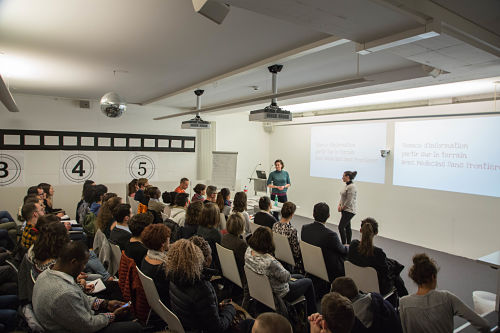
Partir en mission humanitaire ? MSF se présente aux professionnels
Le 8 mai dernier, les chargées du Service Recrutement Terrain ont accueilli environ 50 personnes au sein du... En lire plus


Sea captains Pia Klemp and Carola Rackete
Increasingly in Europe, the actions of individuals and non-governmental organisations who happen to assist, rescue and/or advocate on behalf of survivors, have brought public and political attention to the scenes of civic and humanitarian action around asylum seeking.
Everyone will remember the recent cases of German sea captains Carola Rackete and Pia Klemp who, at one stage, potentially faced respectively 10 and 20 years in prison for rescuing thousands of people from drowning in the Mediterranean…
Similarly, by the end of 2018, SOS Méditerranée and Médecins Sans Frontières’ search and rescue Aquarius vessel was forced to end migrant rescue operations in the same deadly sea. This was a direct consequence of a sustained campaign spearheaded by the Italian government and backed by other European states to de-legitimise and obstruct aid organisations providing assistance to vulnerable people.
The widespread and systematic use of criminal law and public defamation against those who continue to engage in rescue, humanitarian and/or advocacy activities in favour of asylum seekers goes against the duty to rescue those in distress at sea as a fundamental rule of international law.
Instead of criminalising asylum seekers and those helping them, governments should work with all those concerned in a collective effort to promote narratives and practices that emphasise our common humanity, human dignity and empathy with those affected by tragedies of war, armed conflicts, structural violence (e.g. climate, poverty and oppression), as well as individual persecution.
Image: ©Doudou

https://sosmediterranee.ch/
https://www.gbnews.ch/mediterranee-nombre-morts-2018/